Heavier and Lighter
Balance scales, cubes and kitchen scales: which is heavier, how many cubes, and how many grams or kilograms.
Mass from the first comparisons to reading a scale. The balance goes down on the heavier side, and two things share a balance only when one is clearly heavier, so the picture never argues with what the child knows. Weigh things in cubes, read kitchen scales in kilograms, grams or both (every mark numbered, or only some so the child counts on), draw the pointer for a given mass, or number packages from lightest to heaviest by their labels.
- Age
- ages 3–9
- Answer key
- Included, free
- Skills
- measurementcomparingreading scales
What you can change
What the child does
Circle the heavier, Circle the lighter, Which balance is right?, Weigh in cubes, Read the scales, Draw the pointer…
Units
kg, g, kg and g
Numbers on the scale
Every mark, Some marks
Some that balance
How many
2–8
- Every page also takes the book's language, page size, theme and pictures.
Ready-made worksheets with this page
Used in 8 worksheet sets for the school year, each in its country's language.
📏 Measuring
All activities →Length, weight, capacity, temperature and units.
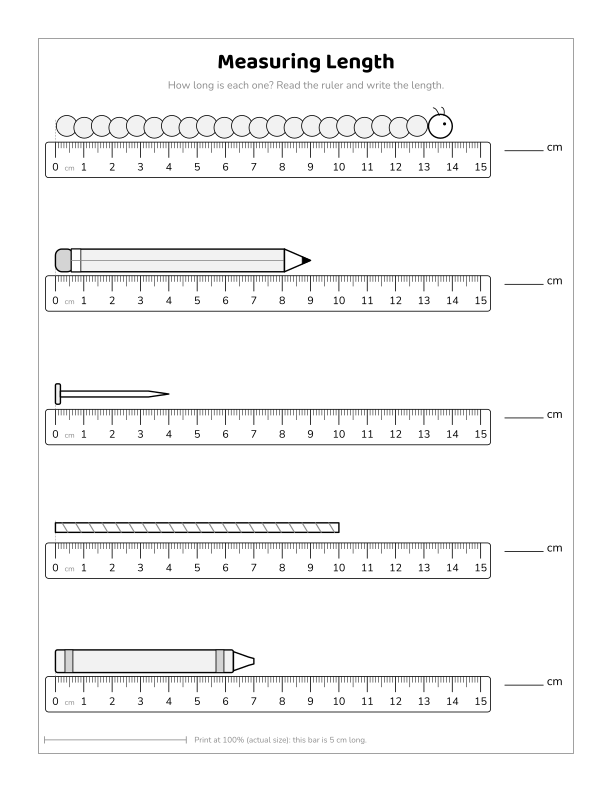
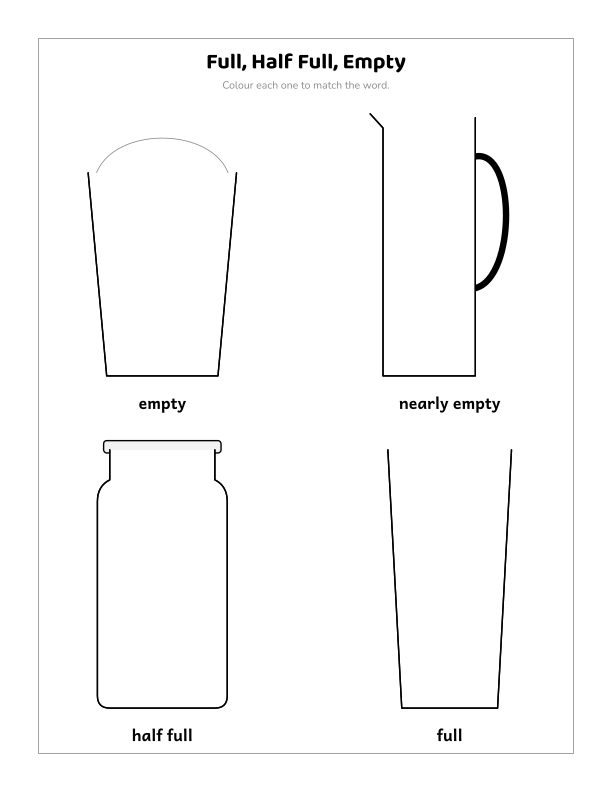
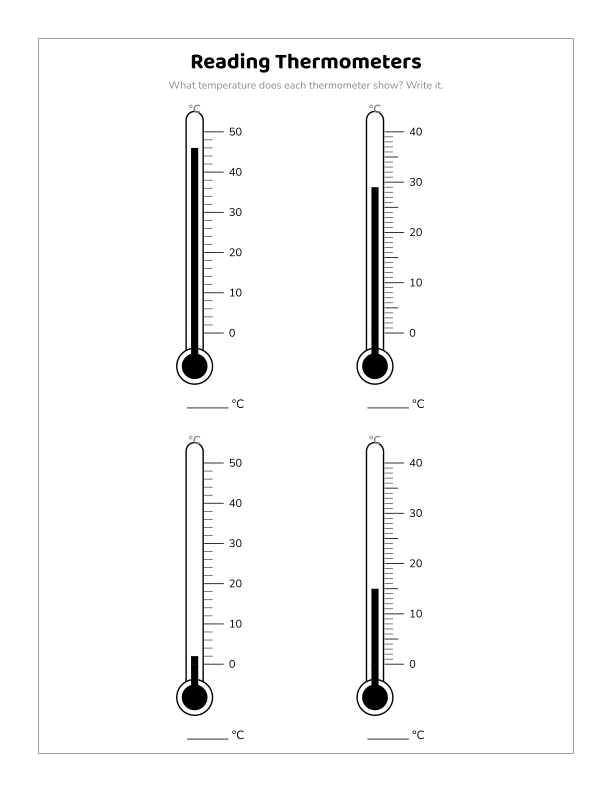
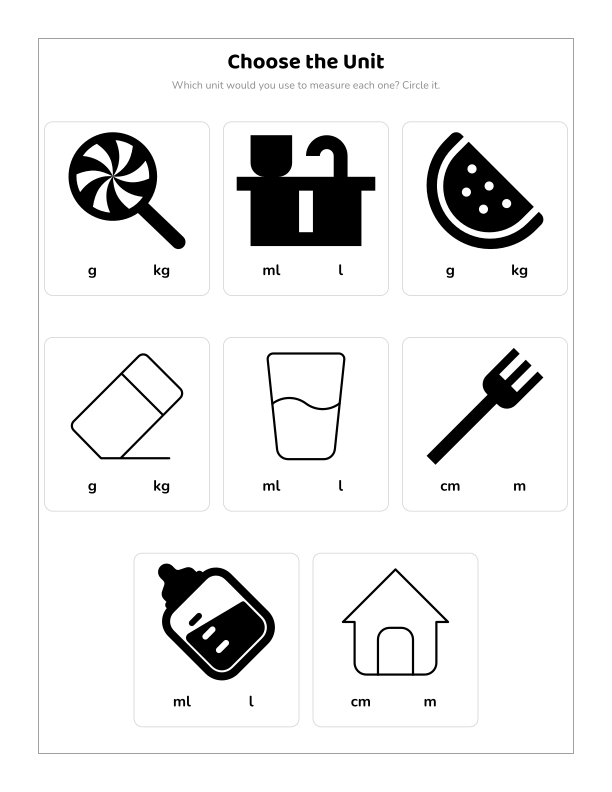
Put it in a book with other pages: covers, answer keys and a certificate are free.
Start building