Square Maze
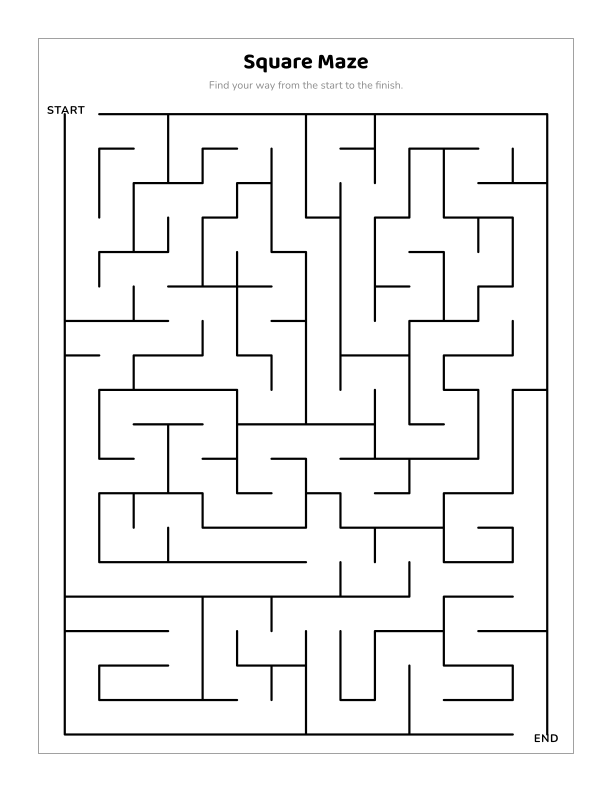
The classic grid maze, from a chunky 8x8 for pre-schoolers to a 36x36 monster.
- Mazes
- ages 3–12
- answer key
- problem solving
- spatial reasoning
- fine motor
116 activity generators, each with its own settings. Every thumbnail below is a real page produced by the studio at its default settings — nothing here is a mock-up.
Square, round, hex and picture-shaped mazes at every difficulty.
The classic grid maze, from a chunky 8x8 for pre-schoolers to a 36x36 monster.
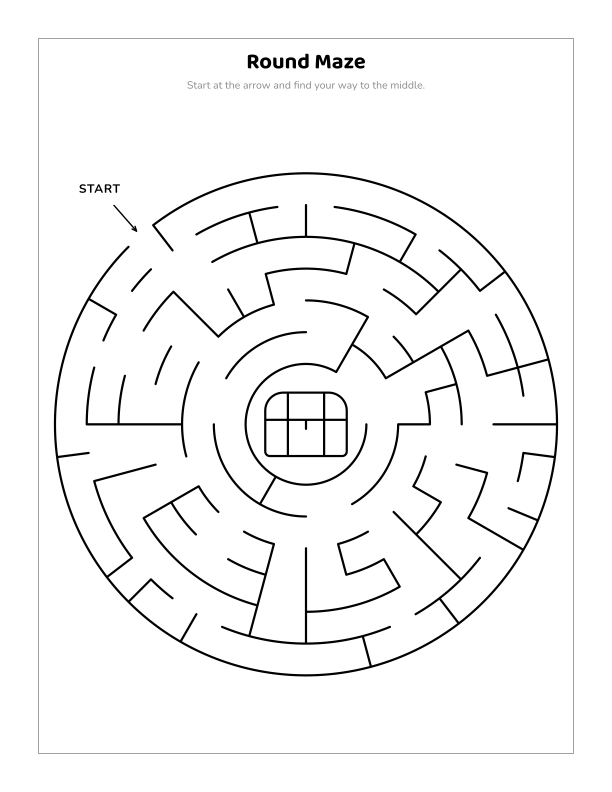
Rings inside rings, with a picture waiting in the middle.
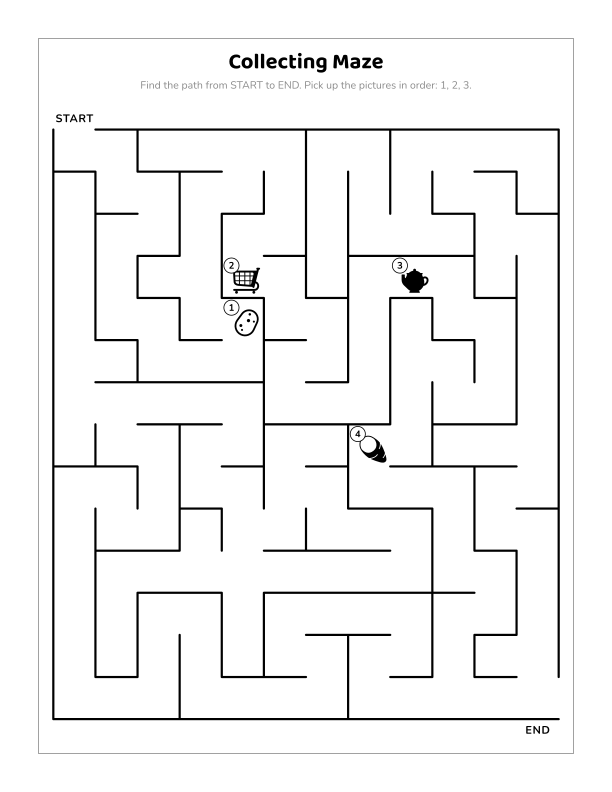
Find the way out, and pick up every picture on the way.
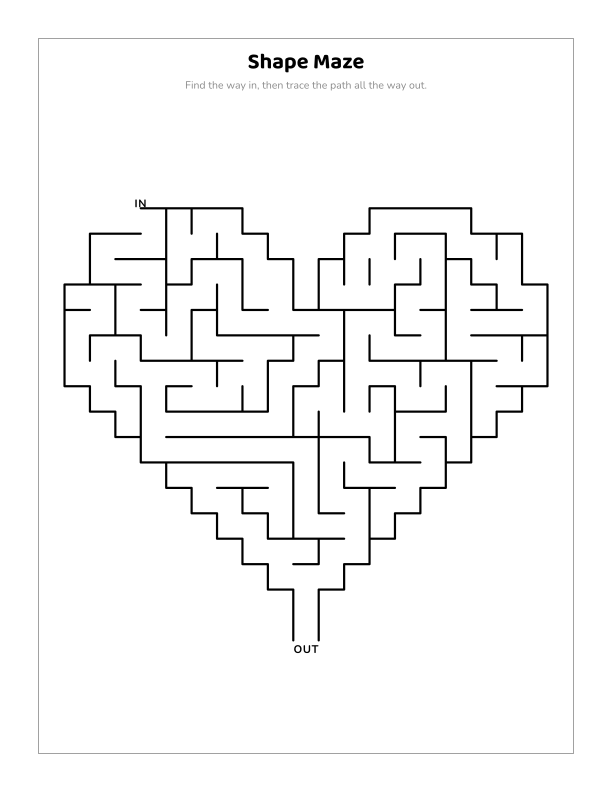
A maze cut into a heart, a star, a letter or a picture.
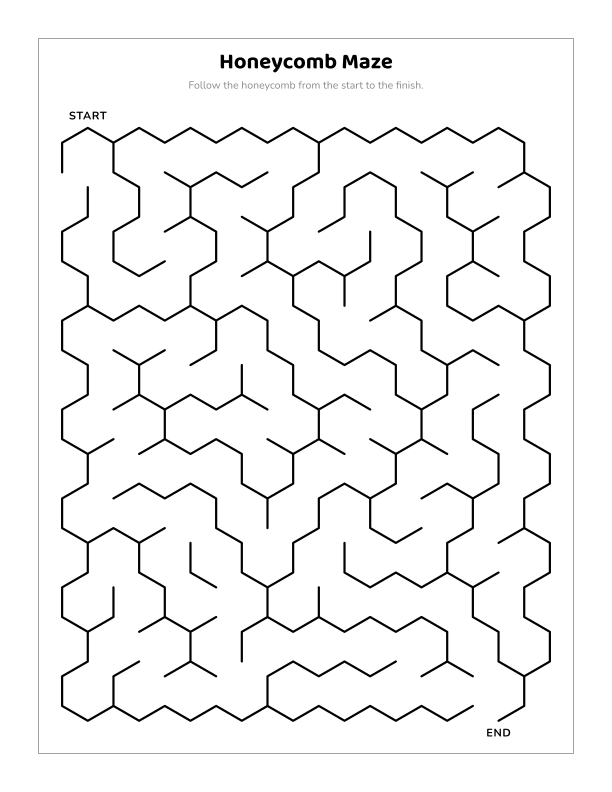
A maze on a honeycomb, where every cell has six ways out.
Follow the alphabet through a grid of letters, from one corner to the other.
Count your way across a grid of numbers — by 2s, by 5s, or on the evens only.
Wavy lines cross and re-cross the page. Trace each one to see where it ends up.
Sudoku, nonograms, codes and number puzzles that build reasoning.
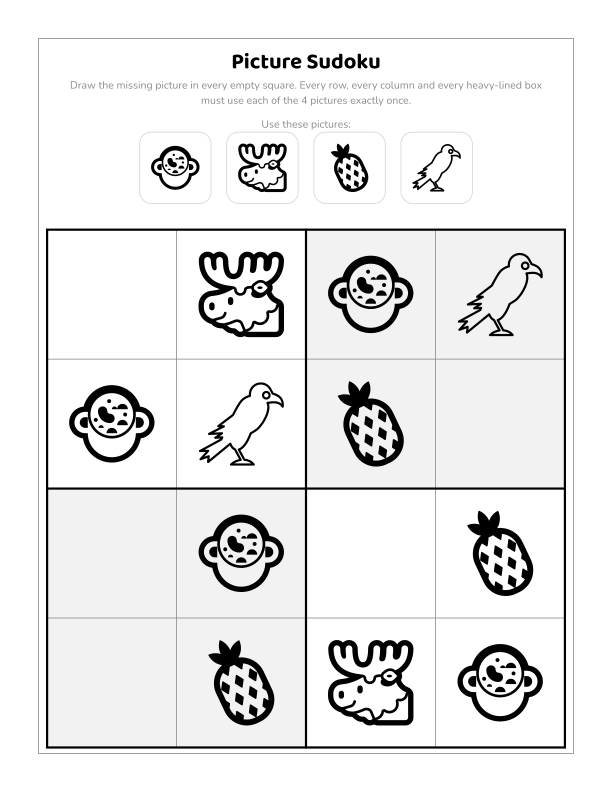
Sudoku with pictures instead of numbers, for children who cannot read numerals yet.
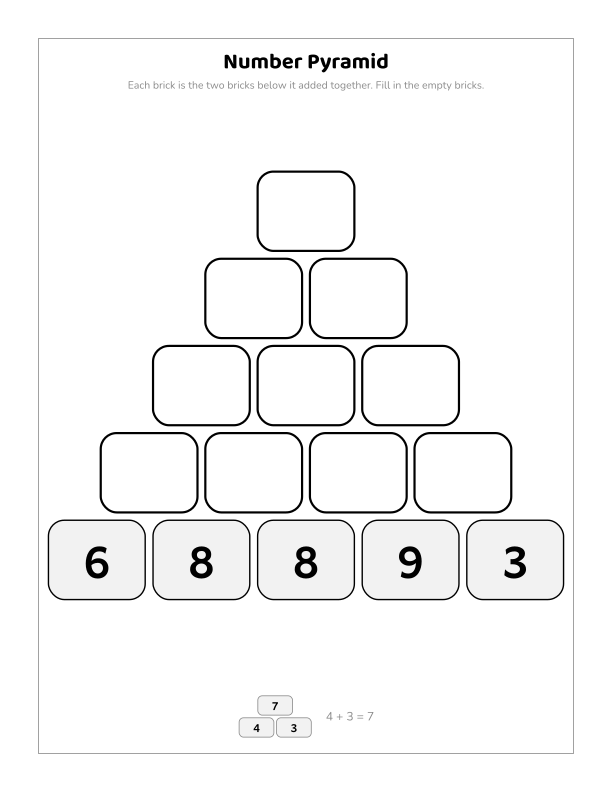
A wall of bricks where each one is the two below it added together.
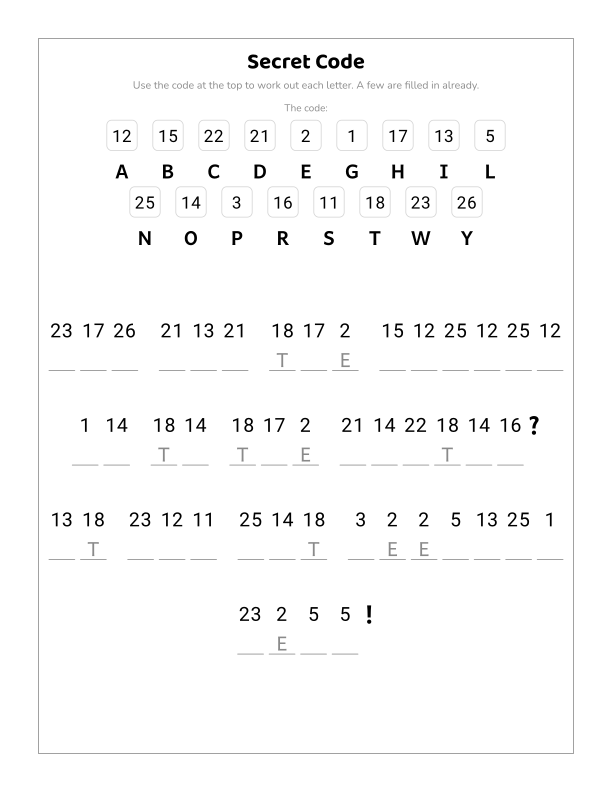
A decoder at the top, a coded message underneath, and a joke at the end of it.
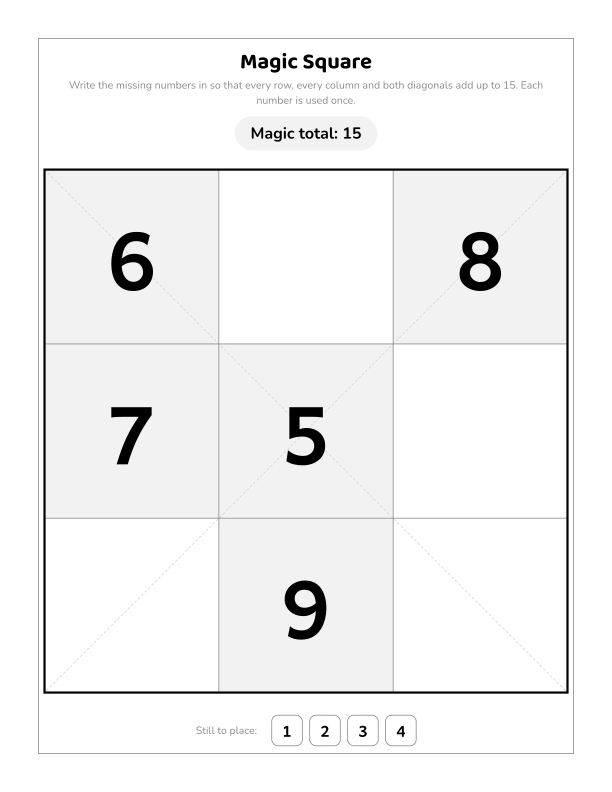
Fill the gaps so every row, column and diagonal adds up to the same total.
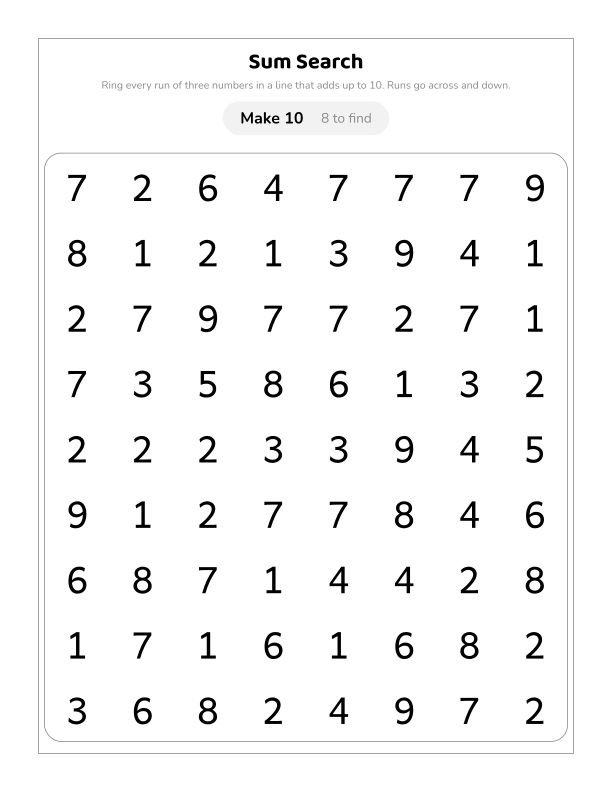
A grid of digits: ring every run of numbers next to each other that hits the target.
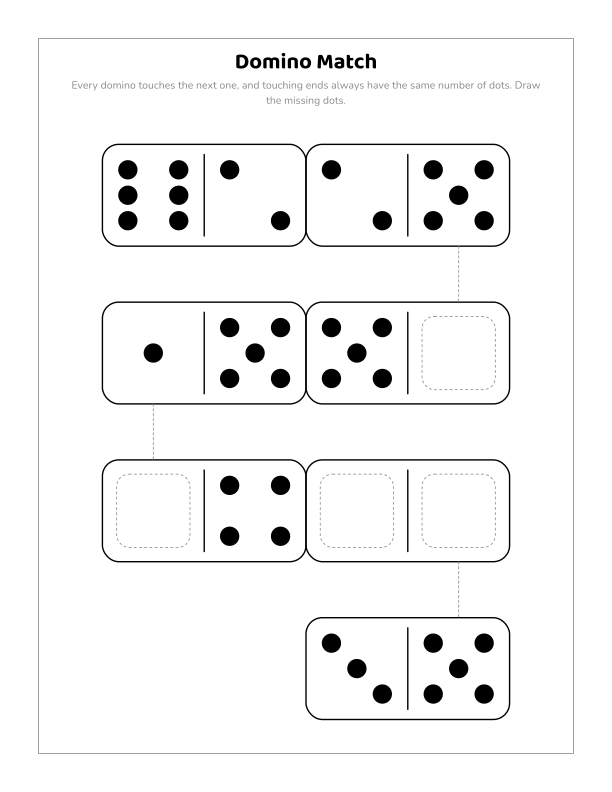
A domino chain with halves missing, or a set to cut out and match by dots.
Draw lines, find pairs, spot the odd one out, sort into groups.
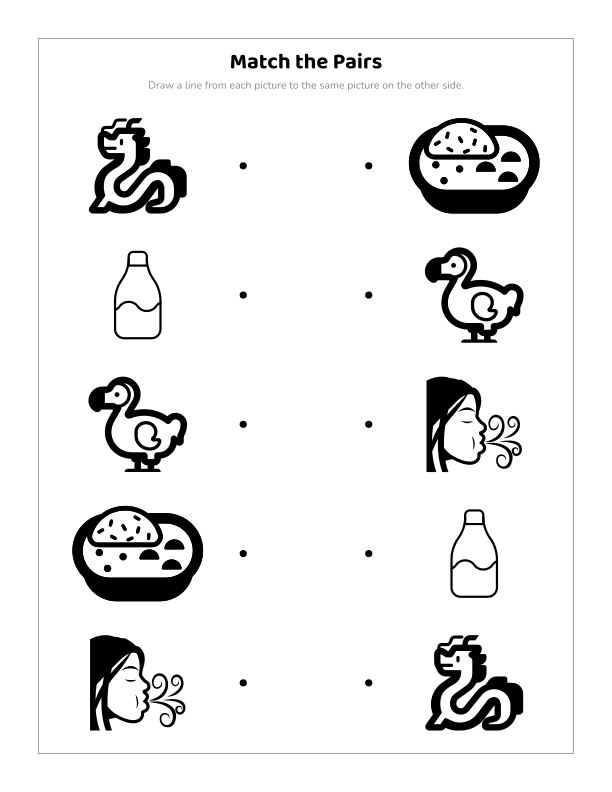
Draw lines to join pairs: pictures, first letters or syllables, words, rhymes, numbers, letter cases, animals and babies.
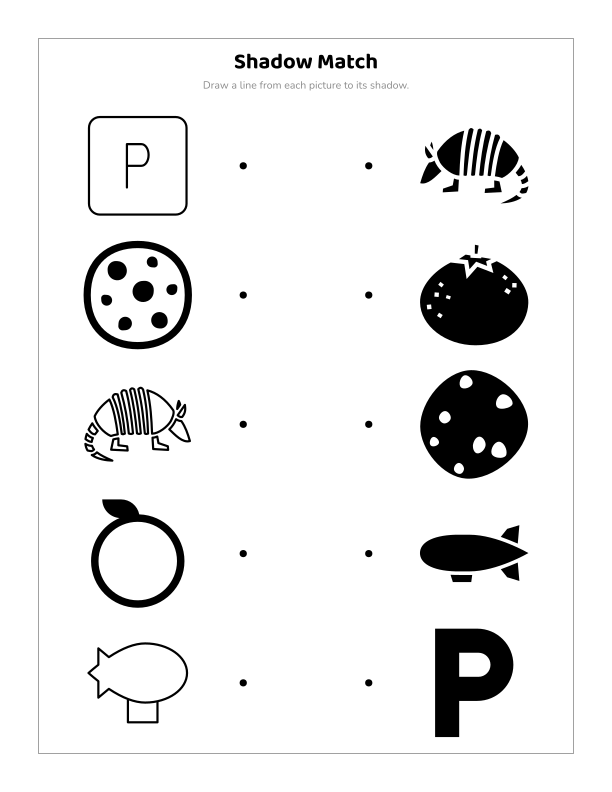
Find the shadow that belongs to each picture. Mirrored and tipped over at harder settings.
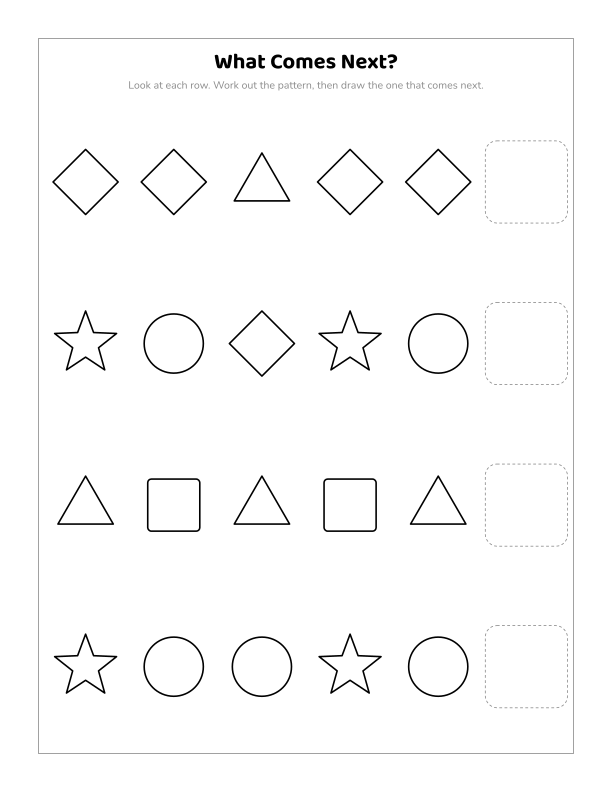
Repeating and growing patterns (AB, ABB, ABC) in shapes, colours, pictures, letters, numbers or syllables, to finish.
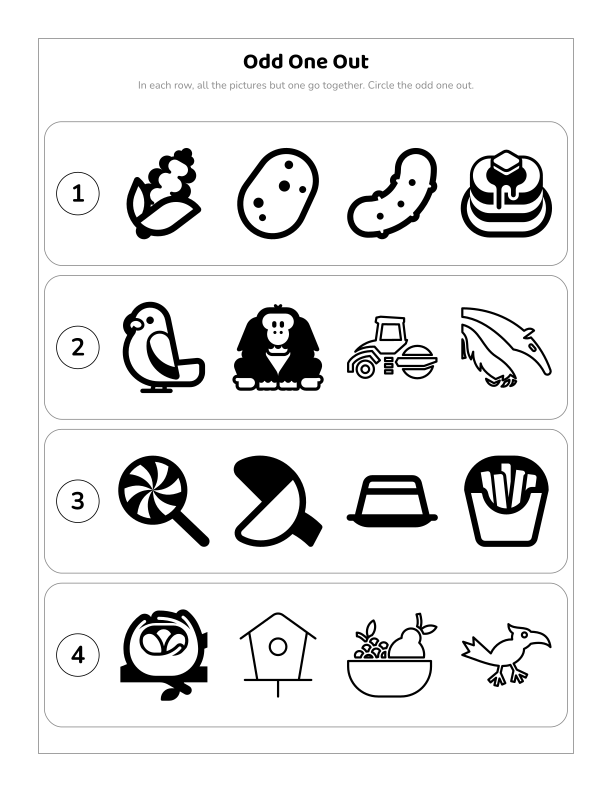
Rows of pictures with one that does not belong. Sort by kind, by rhyme, by size or by which way it faces.
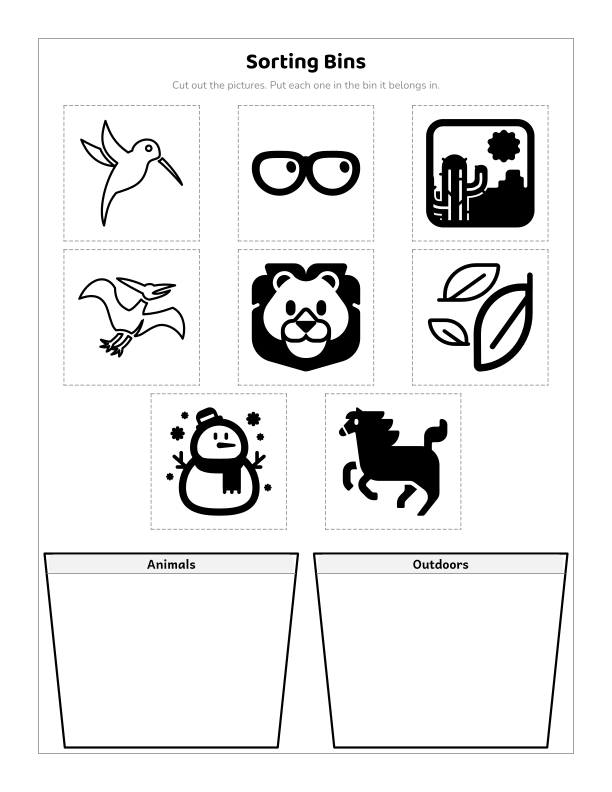
Cut-out pictures at the top, two to four labelled bins at the bottom, one rule to sort by.
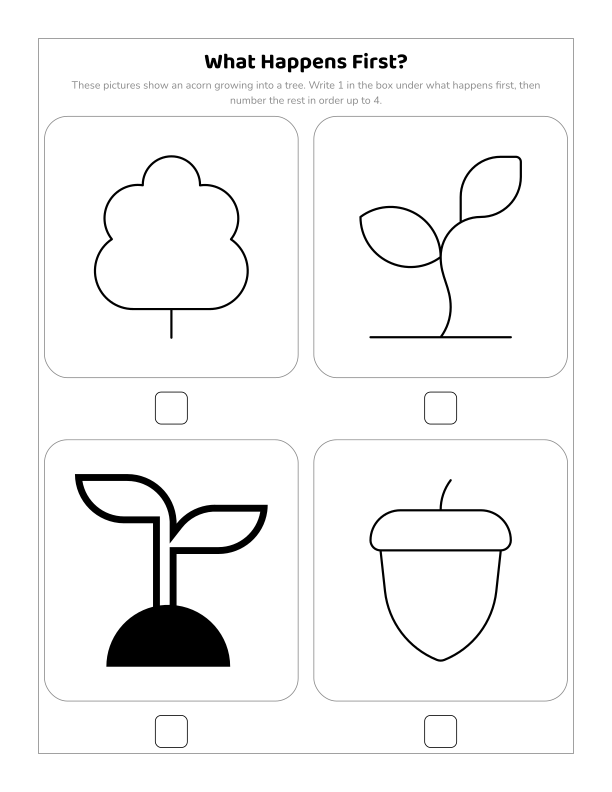
Panels from a familiar story, shuffled, to be numbered back into order.
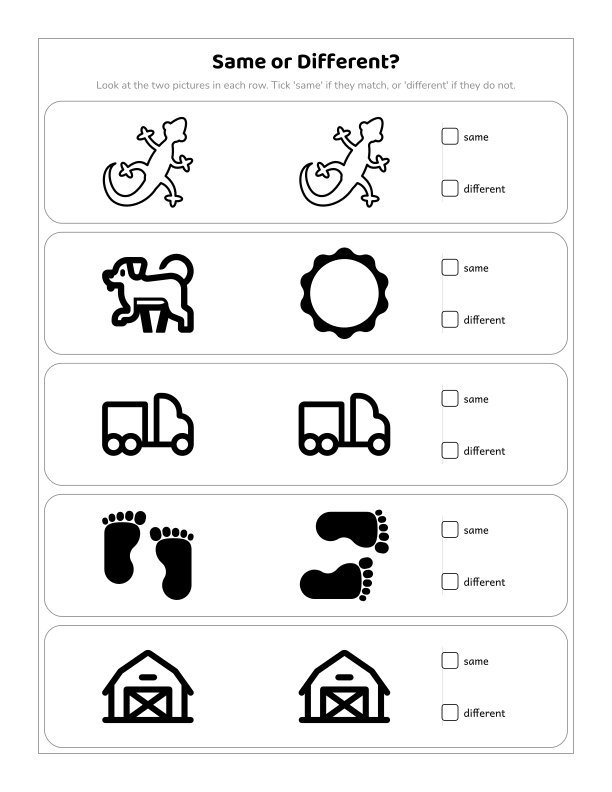
Two pictures in each row and two boxes to tick. Are they the same, or not quite?
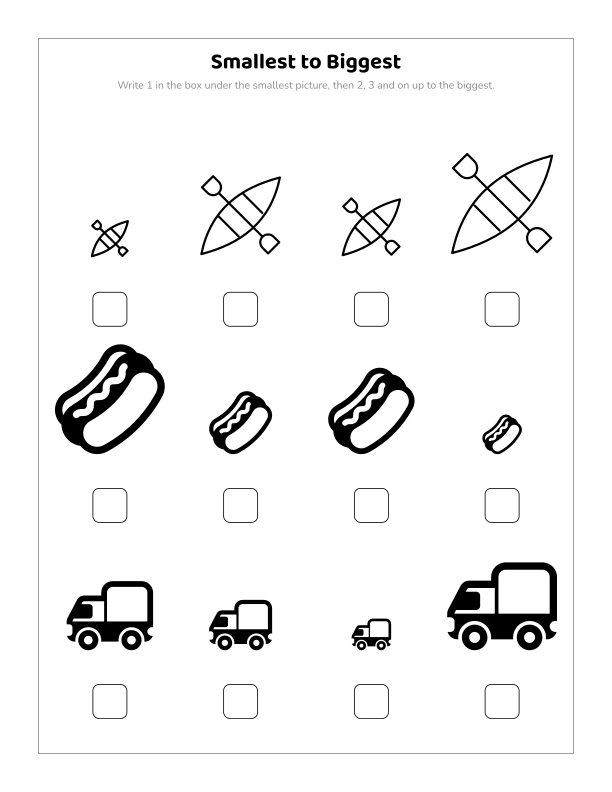
Big and small, long and short, tall and short: number things in order, or colour the biggest, longest or tallest.
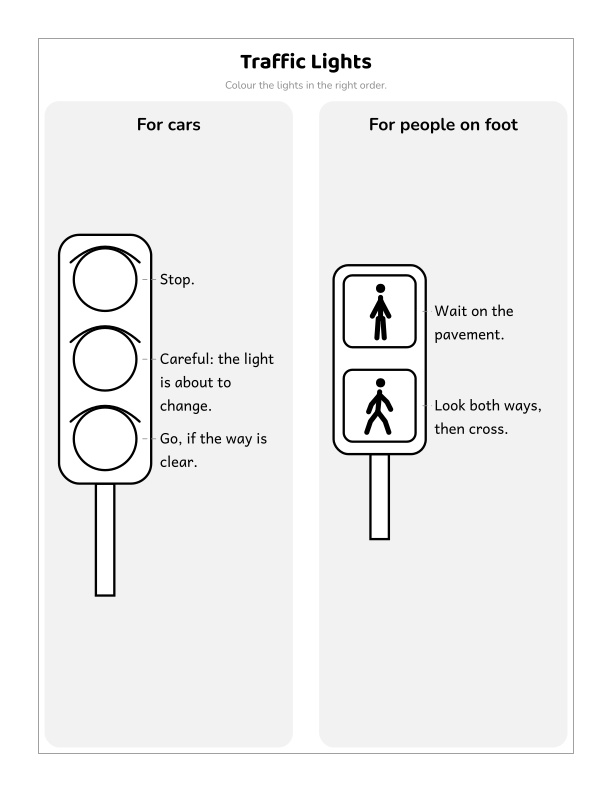
Colour the traffic lights in the right order and draw the safe way across the road.
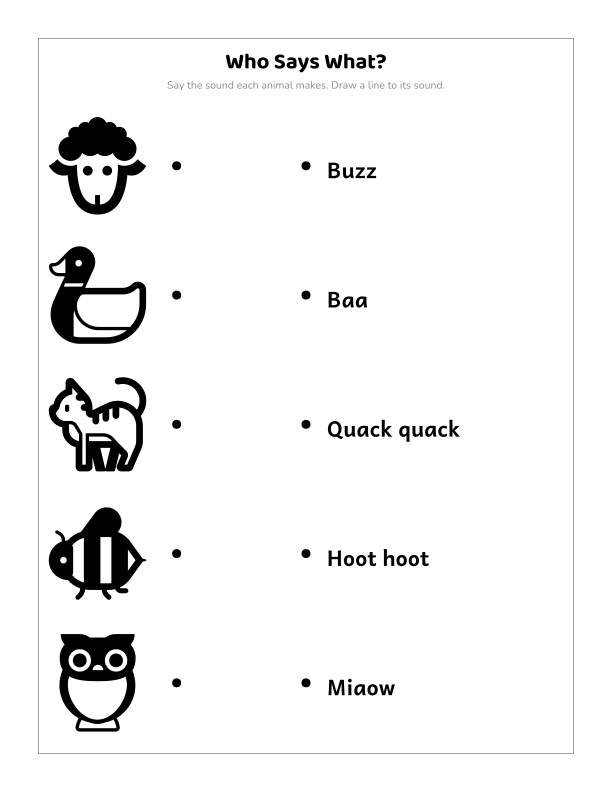
Organs and their jobs, road signs and their meanings, animals and their sounds, American symbols and their names: draw the lines.
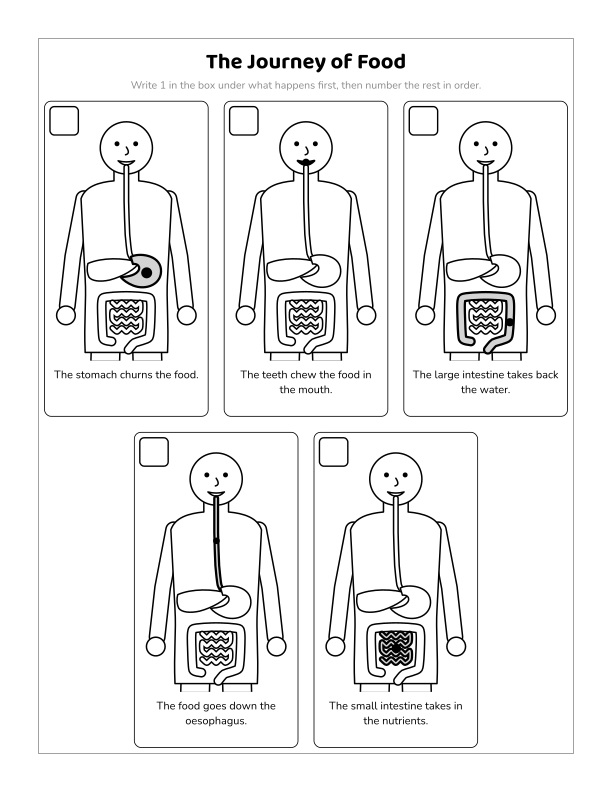
The journey of food, the way air reaches the lungs, how a fossil forms: number the cards in order.
Spot the difference, hidden objects, I-spy counting scenes.
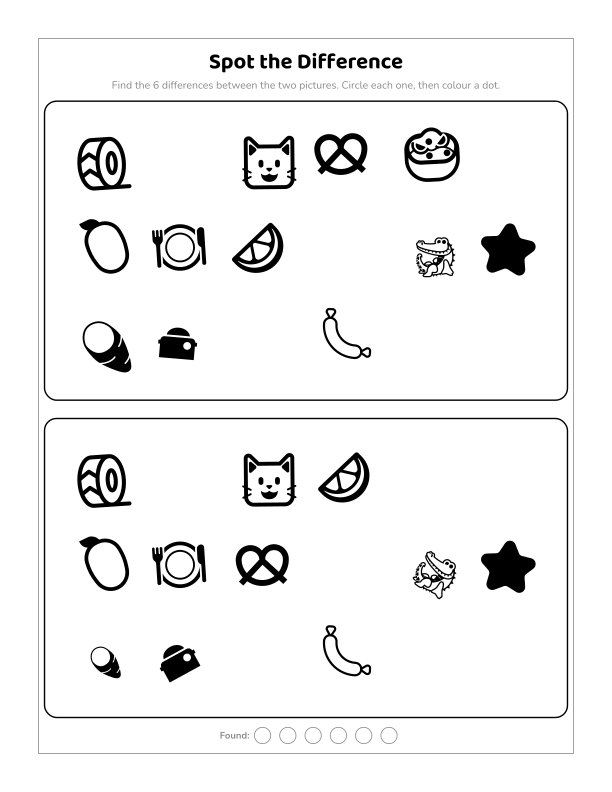
Two scenes that look the same until you look properly. Three to ten changes.
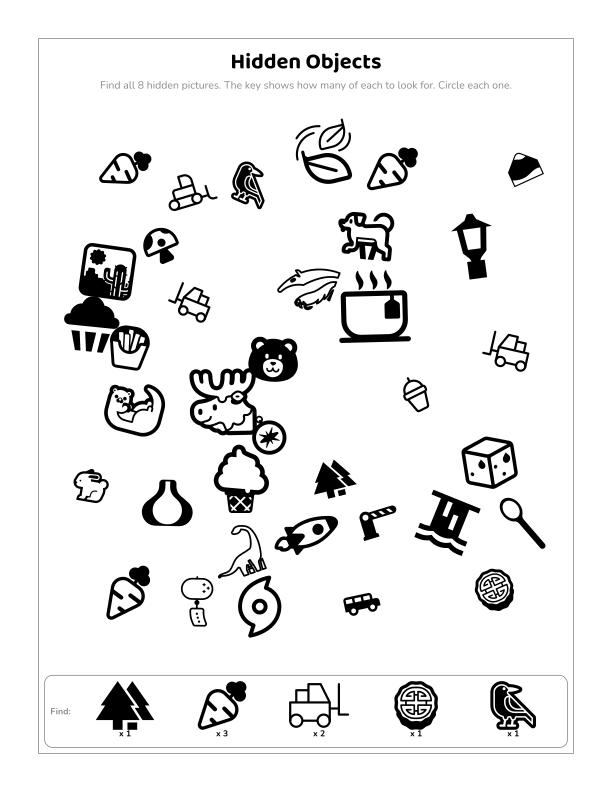
A crowded jumble of pictures with a key strip of things to hunt down.
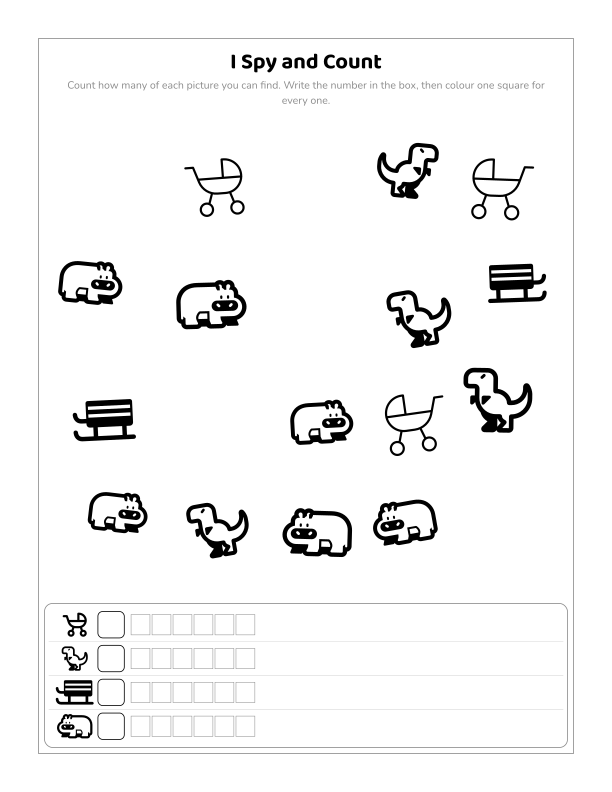
Count how many of each picture are hiding in the scene and fill in the table.
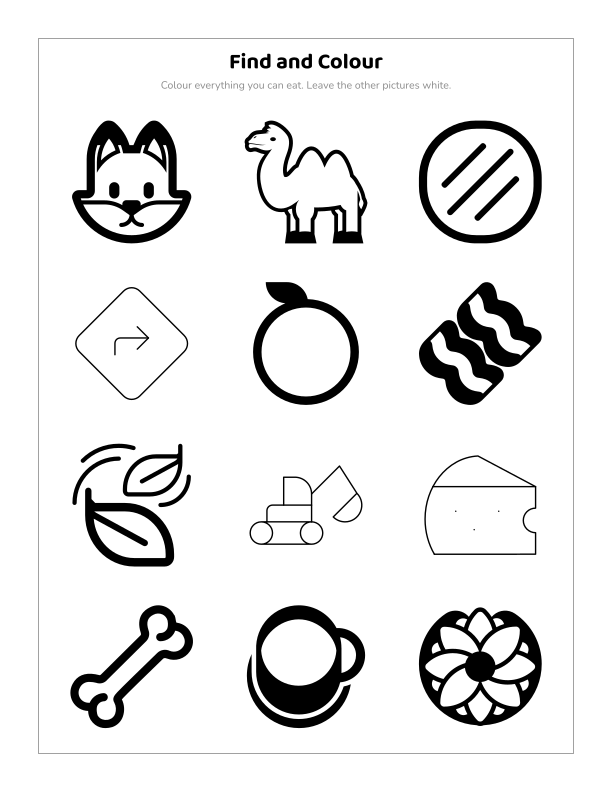
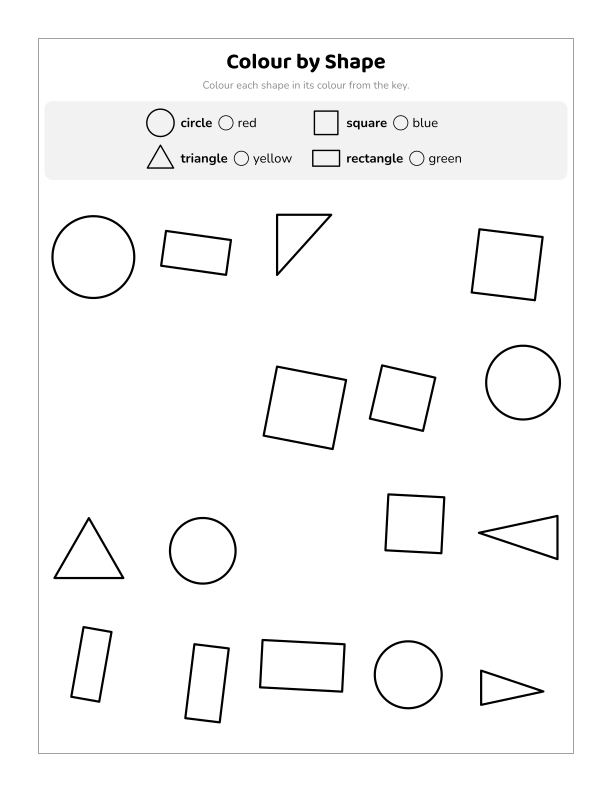
Colour only the pictures that follow the rule and leave the rest alone.
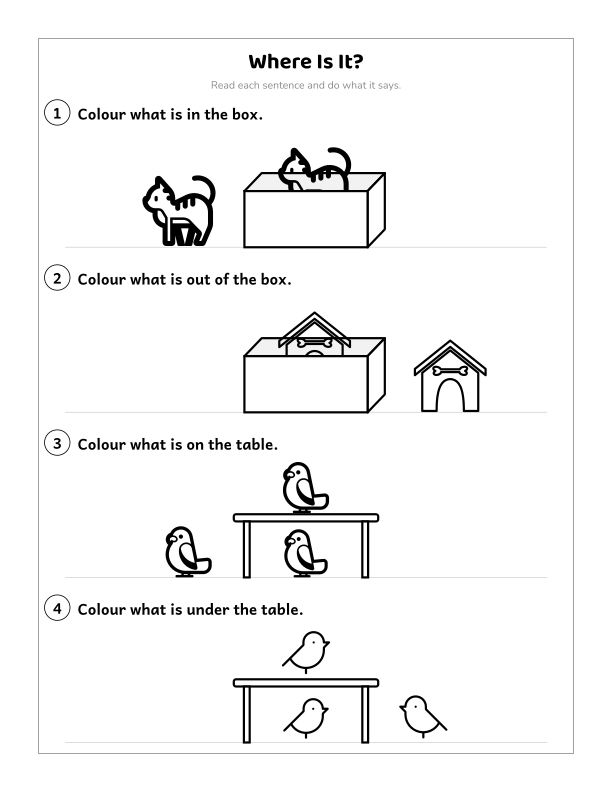
Position words: in and out, on and under, above and below, in front and behind, left and right, near and far.
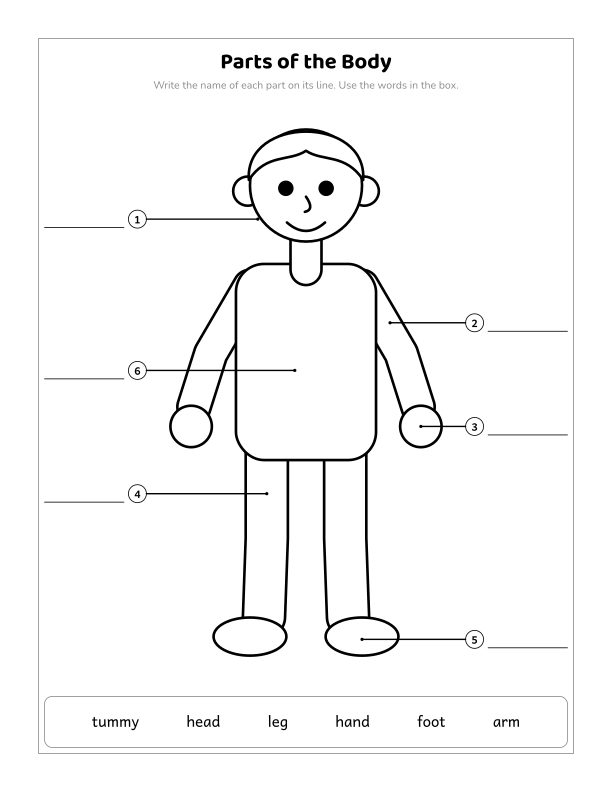
A body, face, plant, house, the organs, body systems or soil layers, with numbered pointers to label and a word bank to copy.
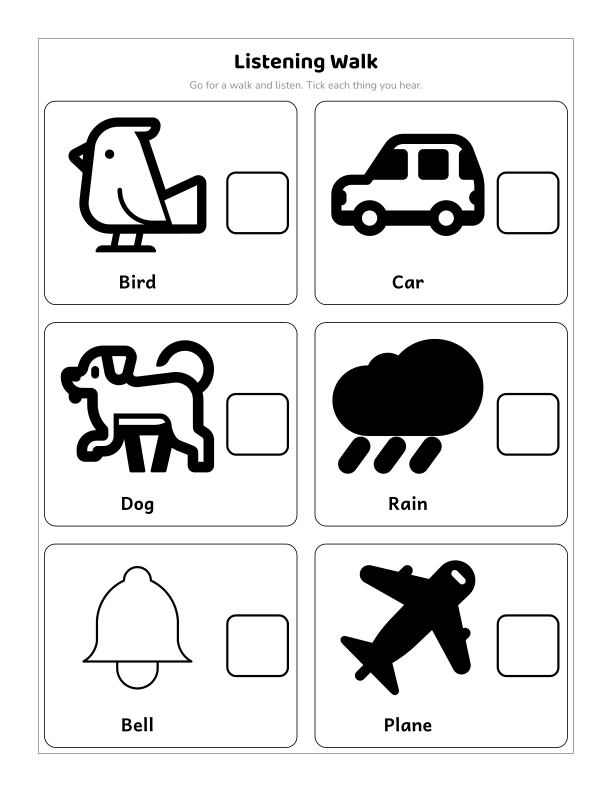
Tick the sounds you hear on a listening walk: a bird, a car, a dog, the rain, a bell, a clock.
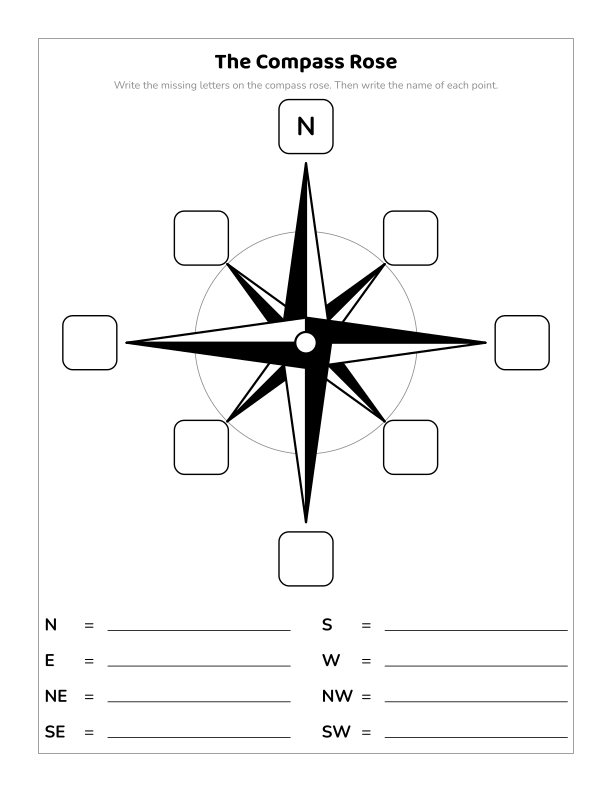
Label a compass rose, follow routes on a grid by the points of the compass, and say what lies in each direction.
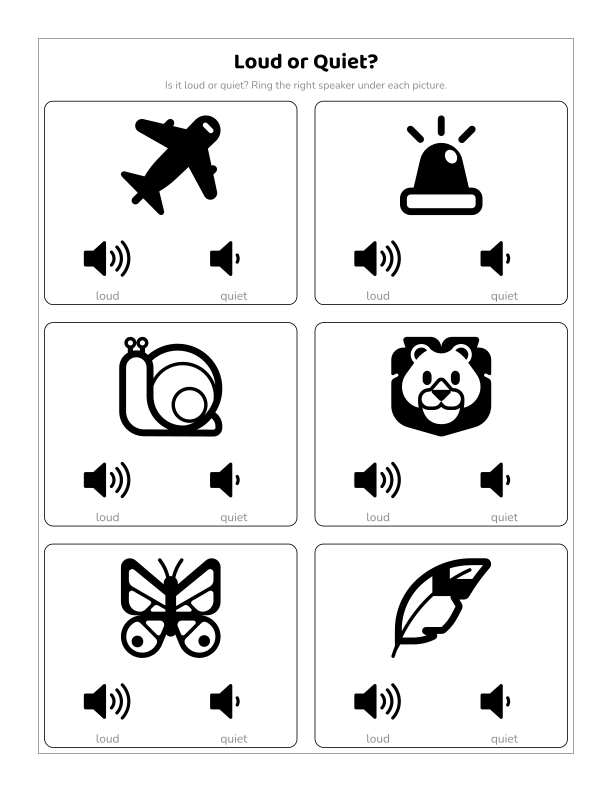
Is it loud or quiet? Ring the loud speaker or the quiet one under each picture.
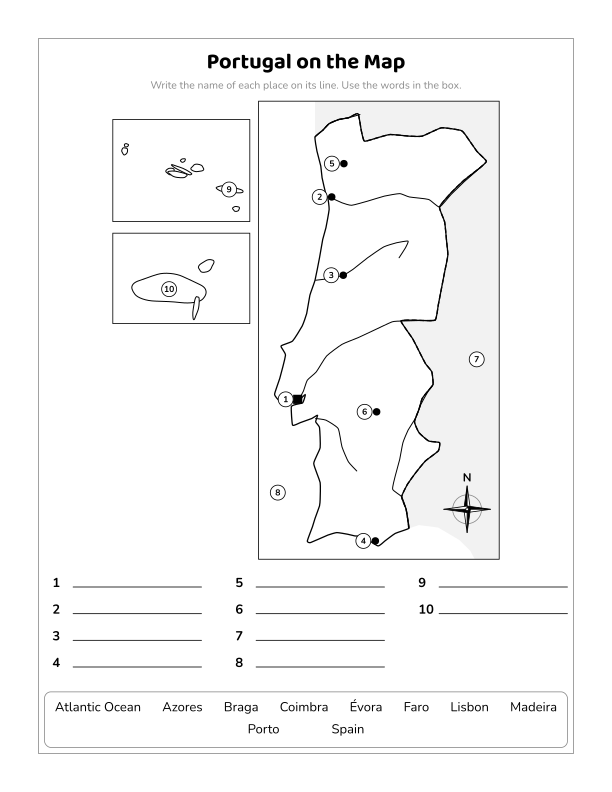
Portugal, the Azores and Madeira: colour the map, label the main rivers and the district capitals.
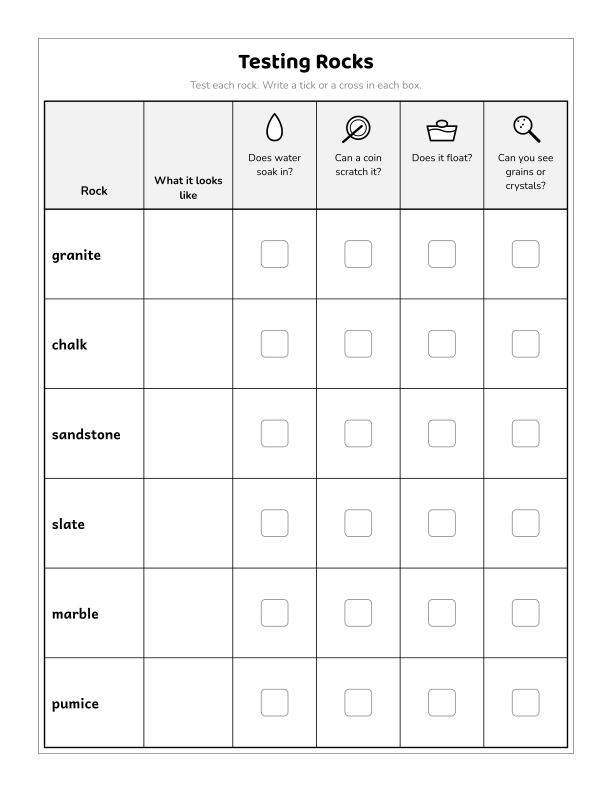
A results table for testing rocks: does water soak in, can a coin scratch it, does it float, can you see grains?
Colouring pages, dot-to-dot, symmetry, grid copying, doodles.
One big picture with a bold outline, ready for crayons.
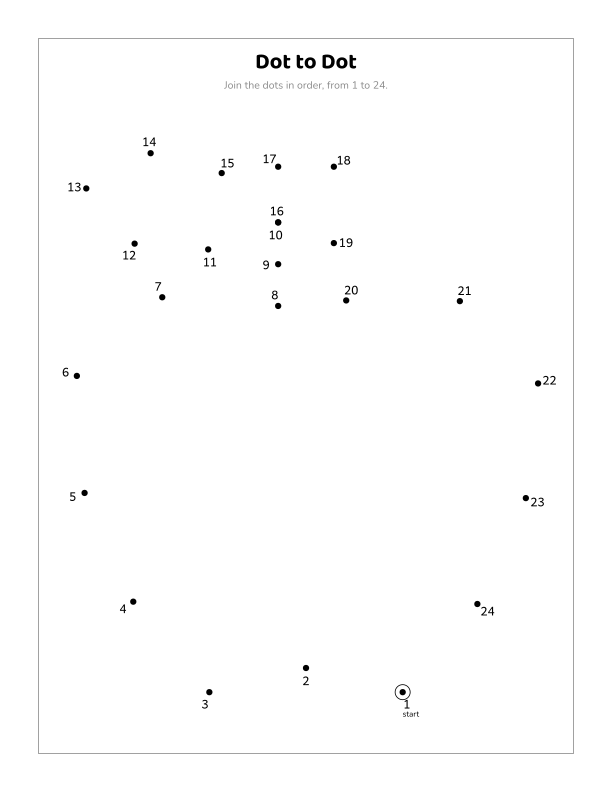
Numbered dots that turn into a picture when they are joined up.
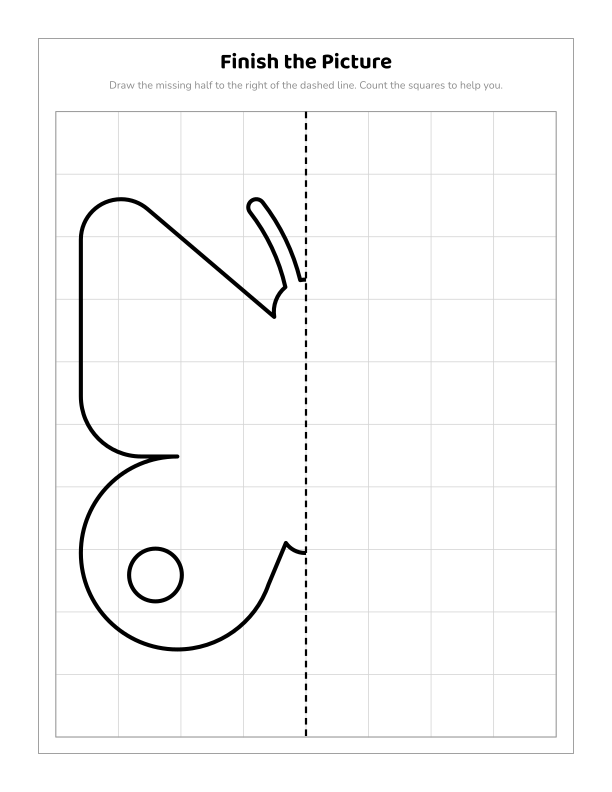
Half a picture, a mirror line and a grid: the child draws the other half.
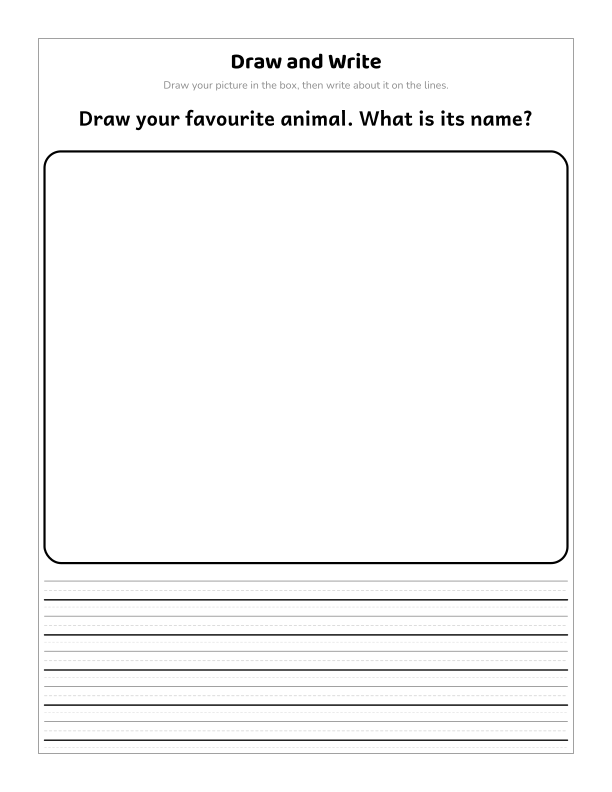
A prompt, a framed box to draw in and ruled lines to write about it underneath.
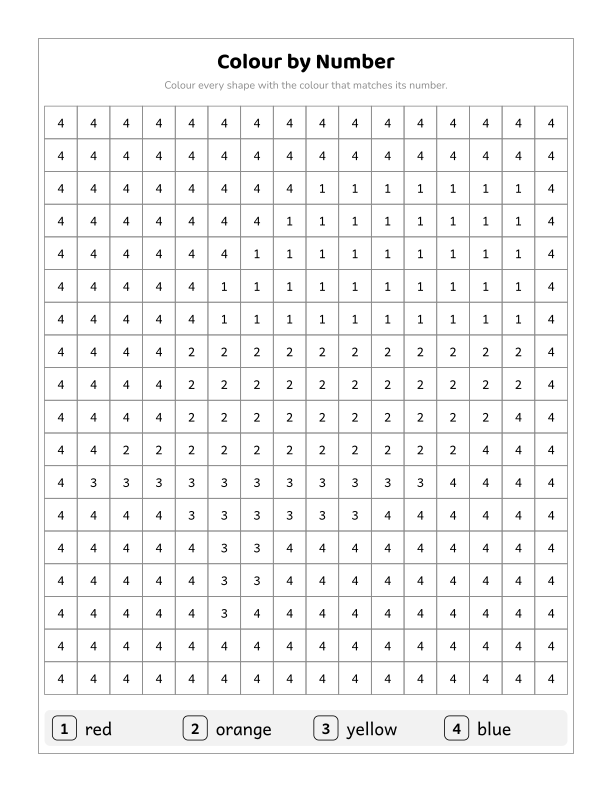
A mosaic of numbered tiles that turns into a picture as it is coloured.
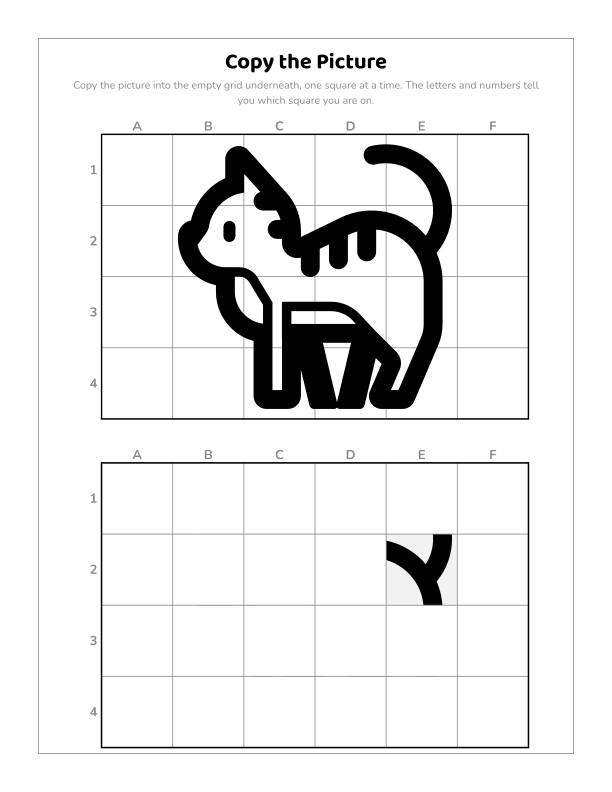
A picture in a lettered grid, an empty grid beside it, and one square at a time.
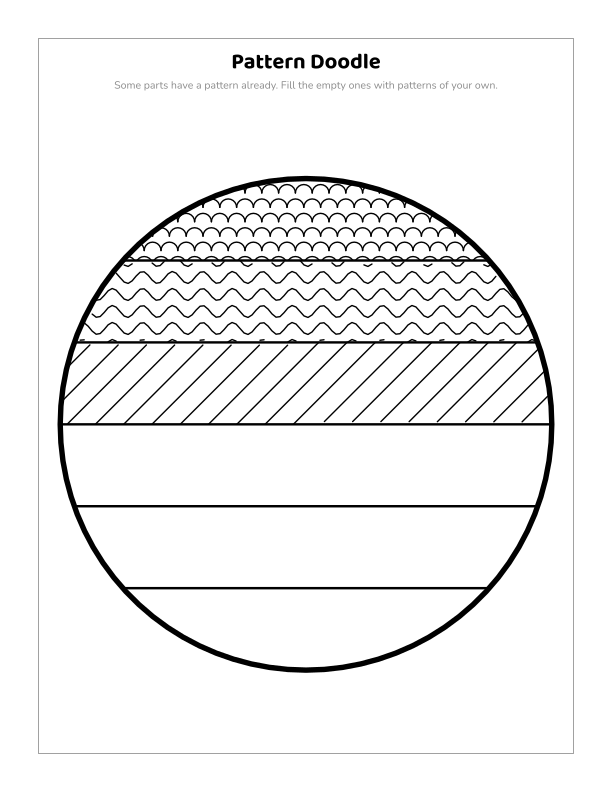
A shape split into bands, some filled with stripes and spots and the rest left empty.
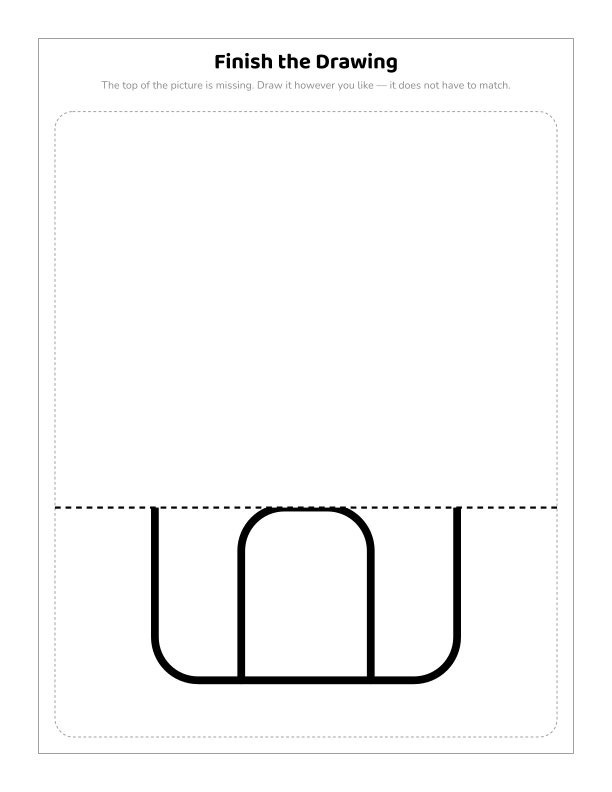
Part of a picture is printed and the rest is up to the child. No right answer.
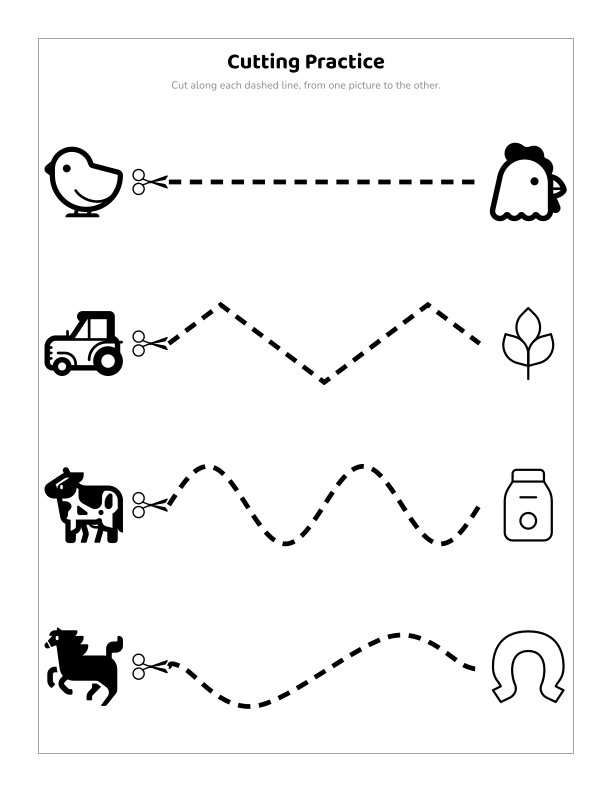
Dashed lines to cut along with scissors: straight, zigzag, wavy and curvy, from one picture to another.
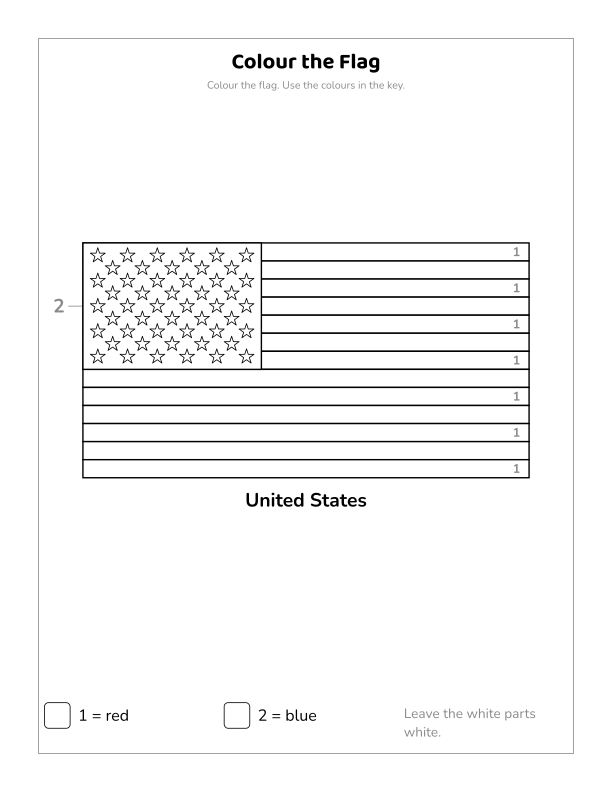
A flag to colour by numbers: the Stars and Stripes, the tricolours of France, Italy, Germany and more, or Japan.
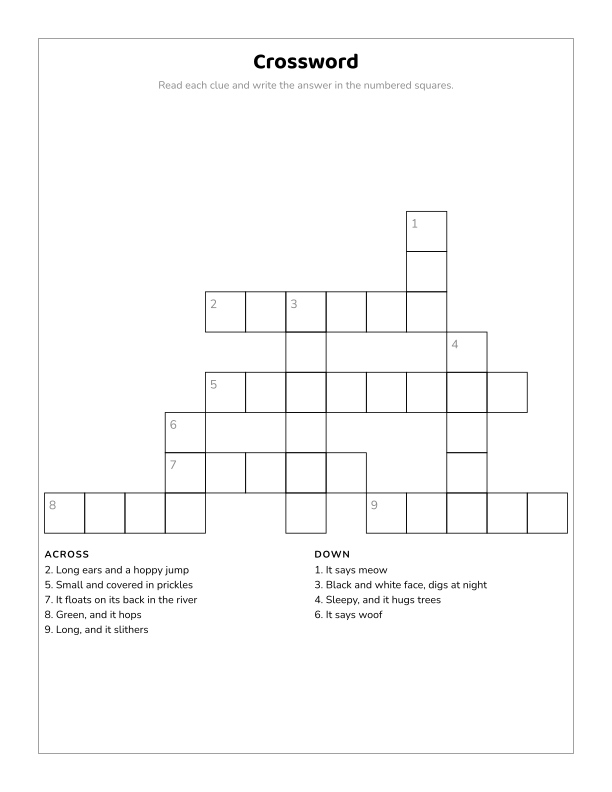
Word searches, crosswords, scrambles, alphabet and phonics work.
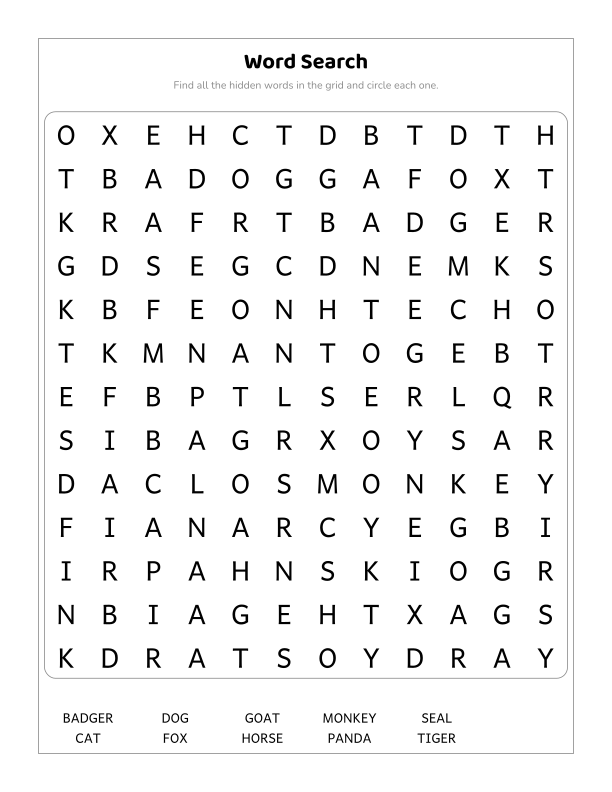
Hide a spelling list in a grid of letters, from straight-lines-only to backwards diagonals.
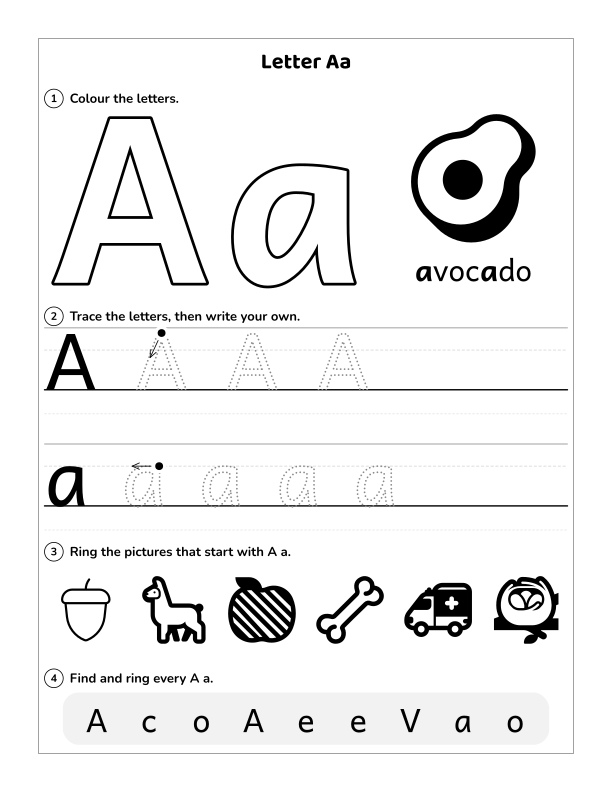
A big letter to colour, rows to trace, pictures that start with it and a row to find it in.
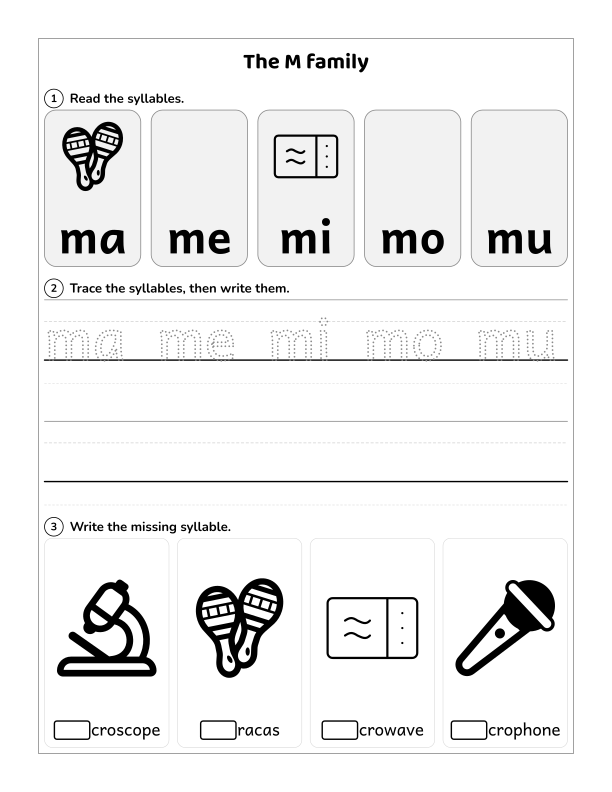
pa pe pi po pu: read and trace a syllable family, complete words, join syllables to pictures.
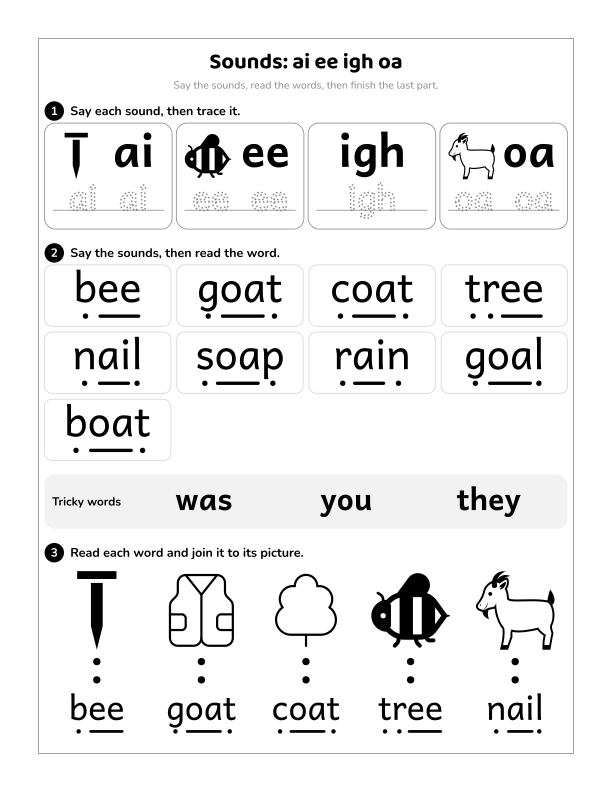
The week's sounds to say and trace, words with sound buttons, tricky words and a picture strip.
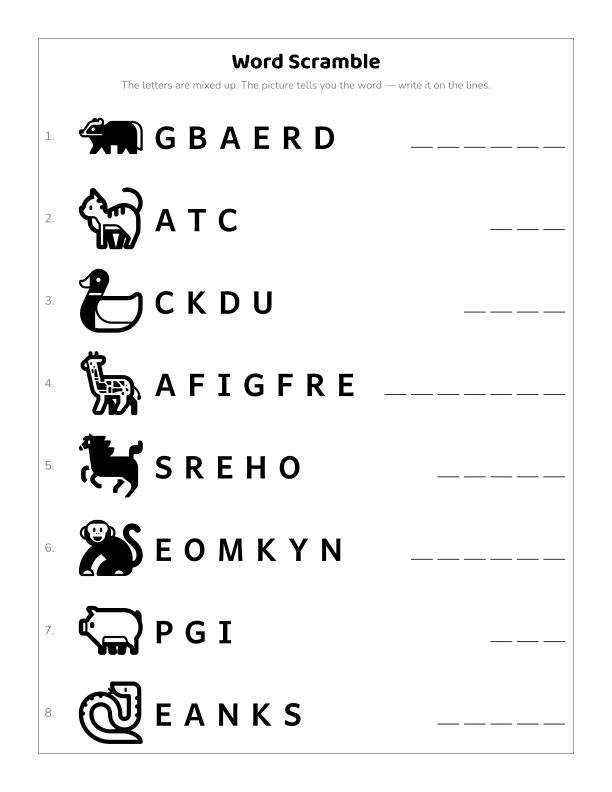
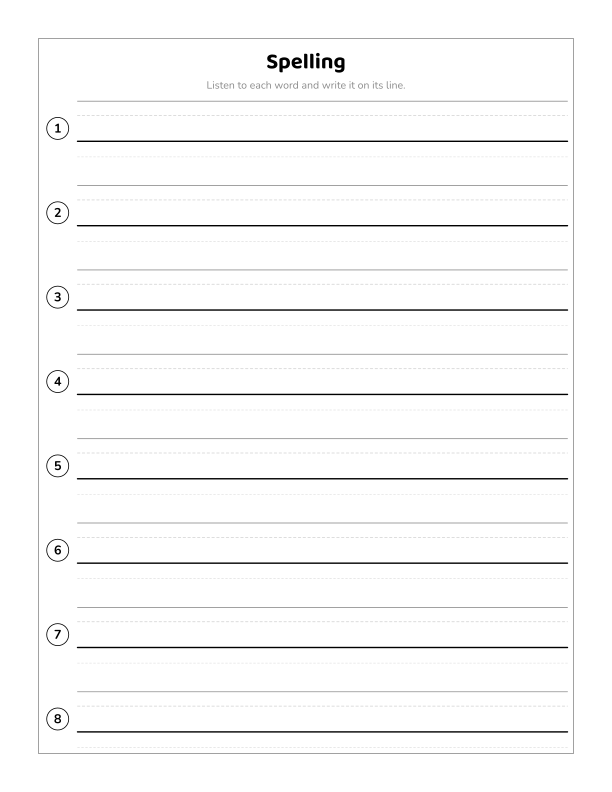
Muddled-up words to unscramble, with a picture or a clue to help and a blank for every letter.
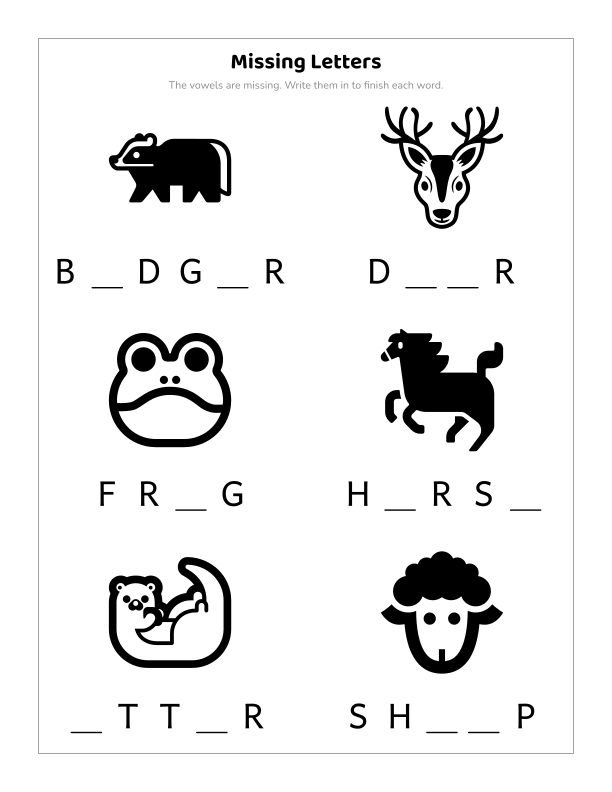
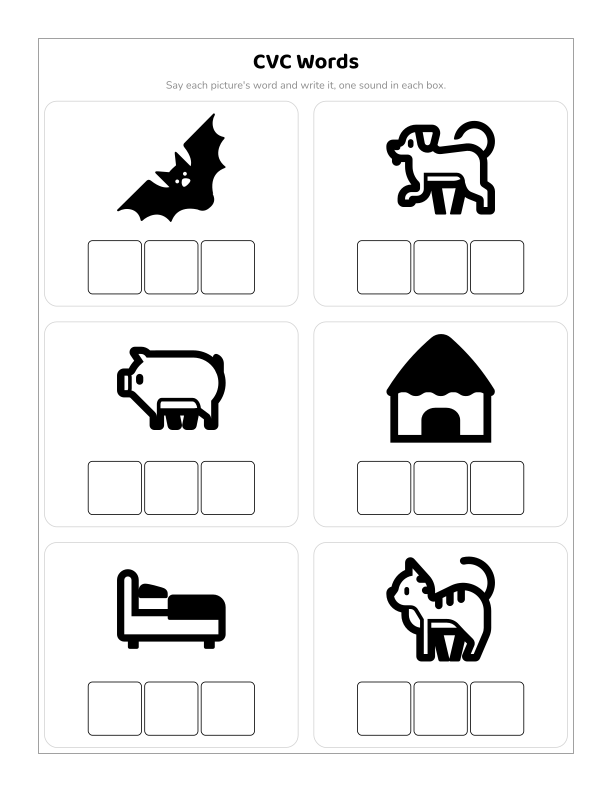
A picture and a word with letters knocked out: first, last, the vowels, a syllable, or the letters you choose (r or rr?).
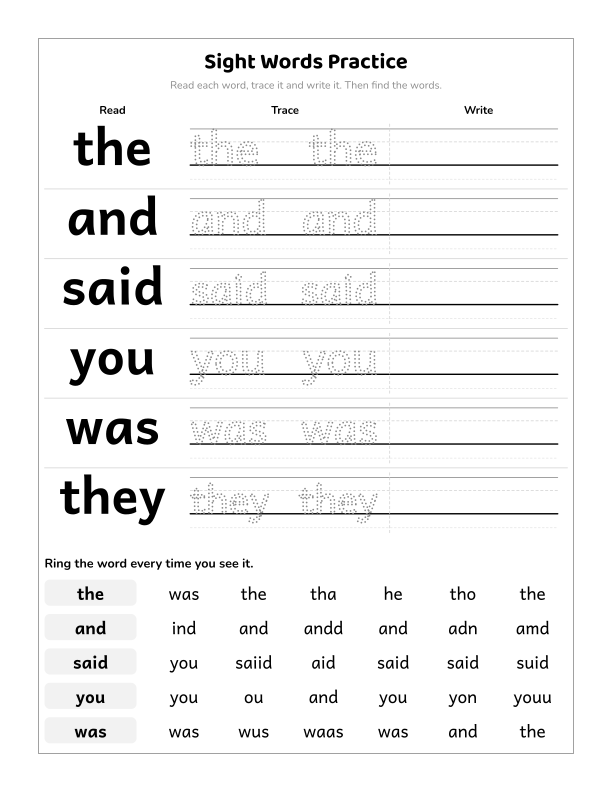
Tricky words to read, trace, write and then find among look-alikes or in a word search.
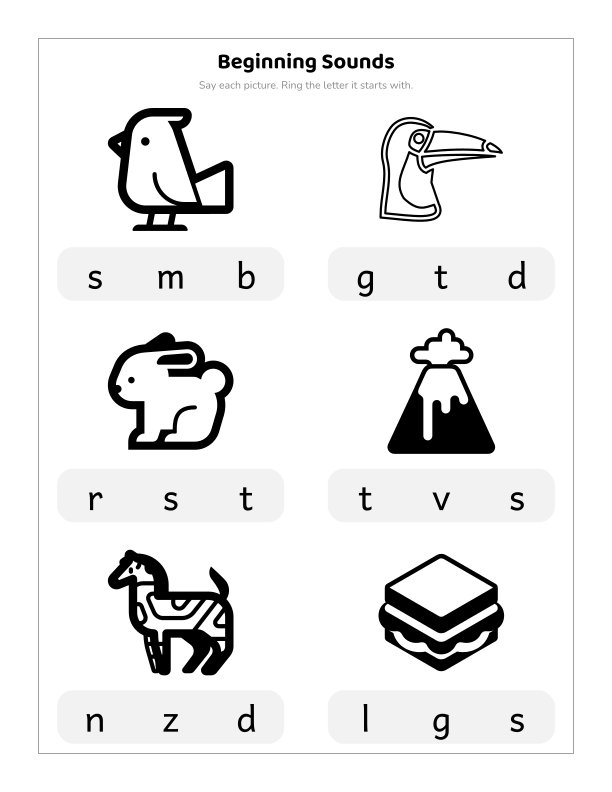
Ring the letter a picture starts with, write it in, or hunt a page of pictures for one sound.
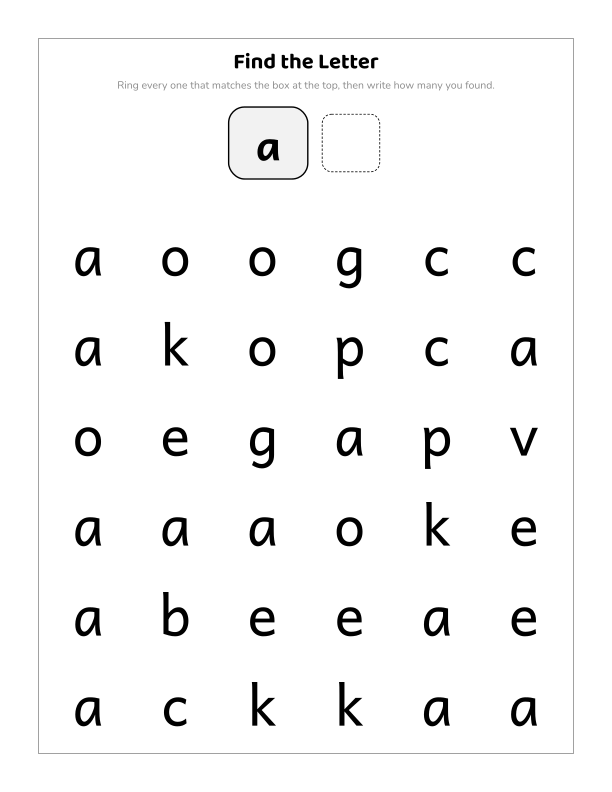
Ring every b among the d, p and q: a field of look-alike letters, syllables or words.
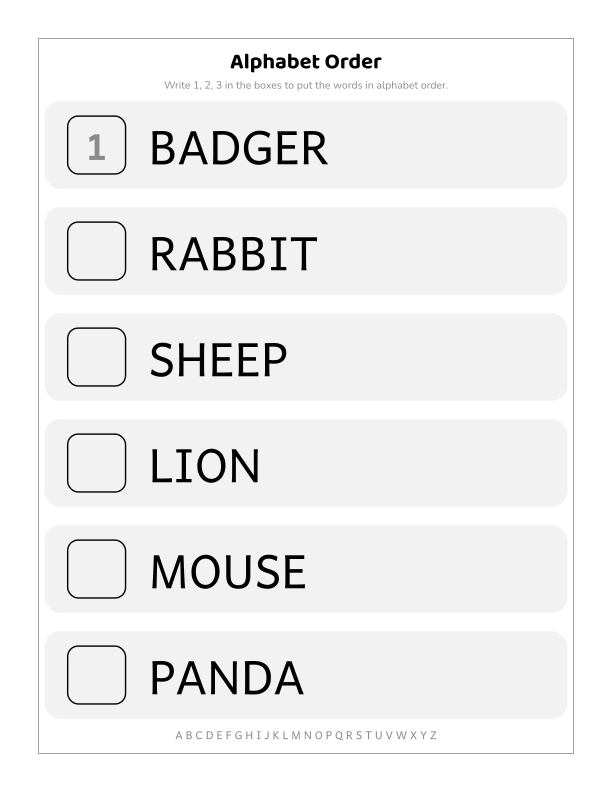
Number words or pictures into alphabet order, fill the gaps in a run of letters, or join capitals to small letters.
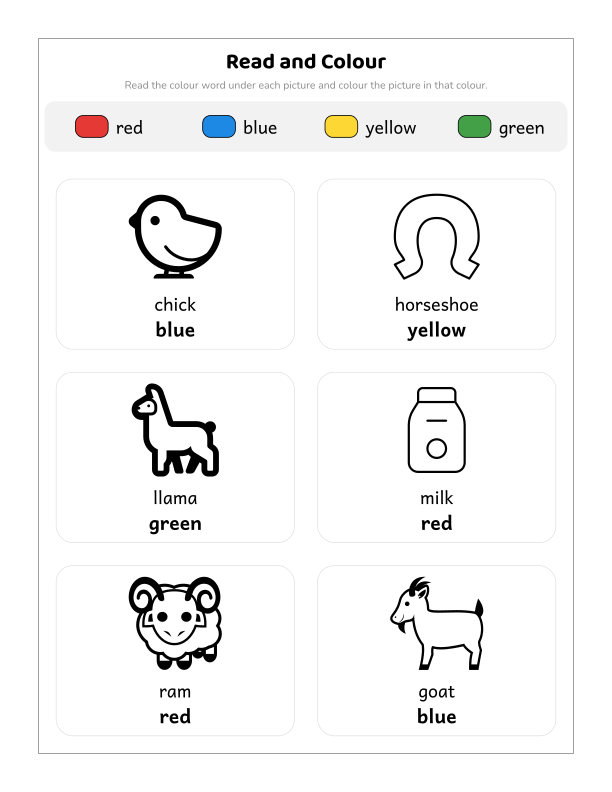
Pictures with their words: read a colour, a phrase or a word, then colour.
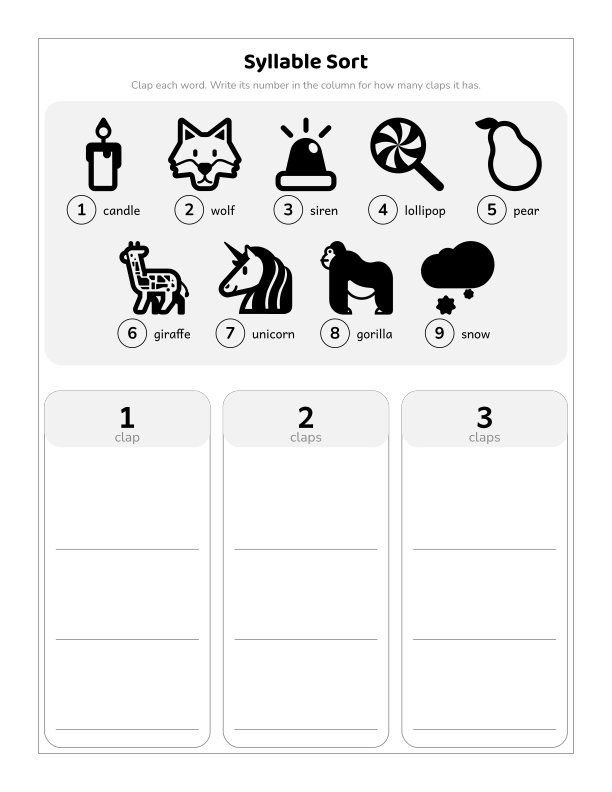
Clap each word, then sort the pictures or words into columns headed 1, 2 and 3 -- or by the letters they have.
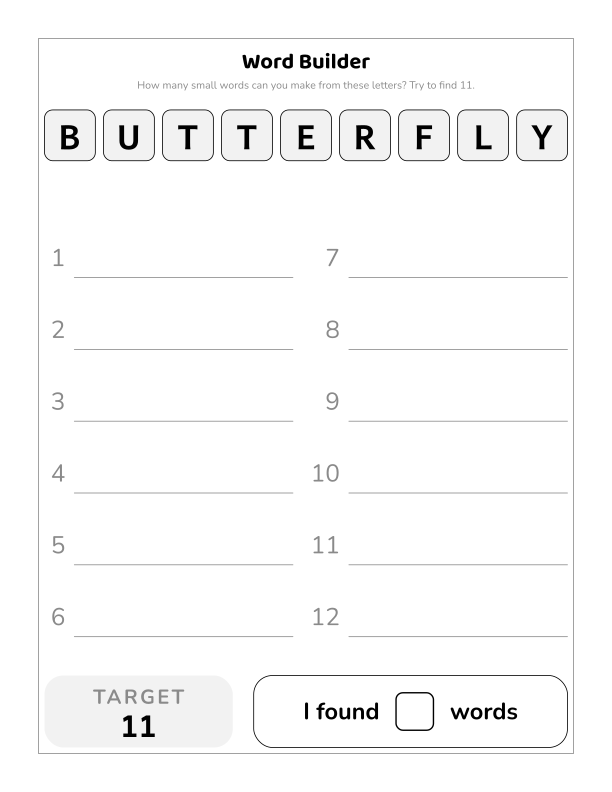
How many small words hide inside one long one? Write an acrostic, or build words from their syllables.
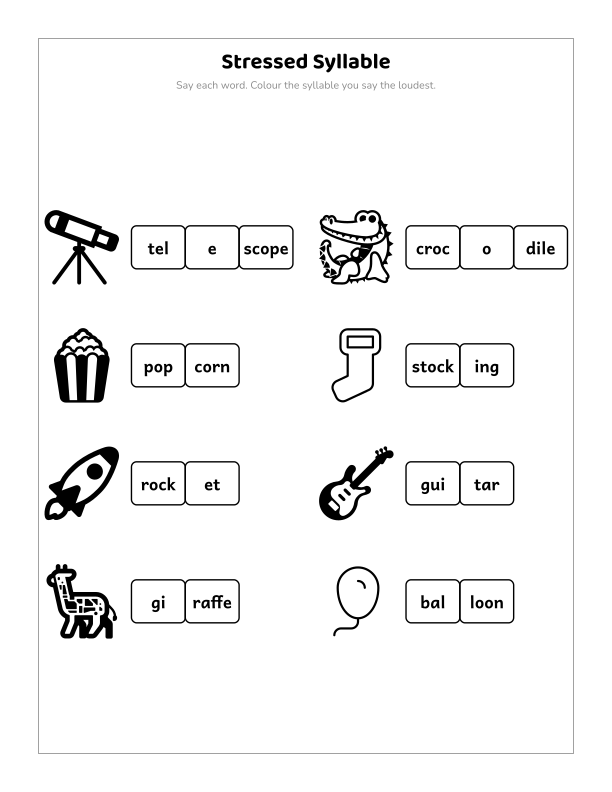
Colour the stressed syllable, sort words by where the stress falls, and put the missing accent back.
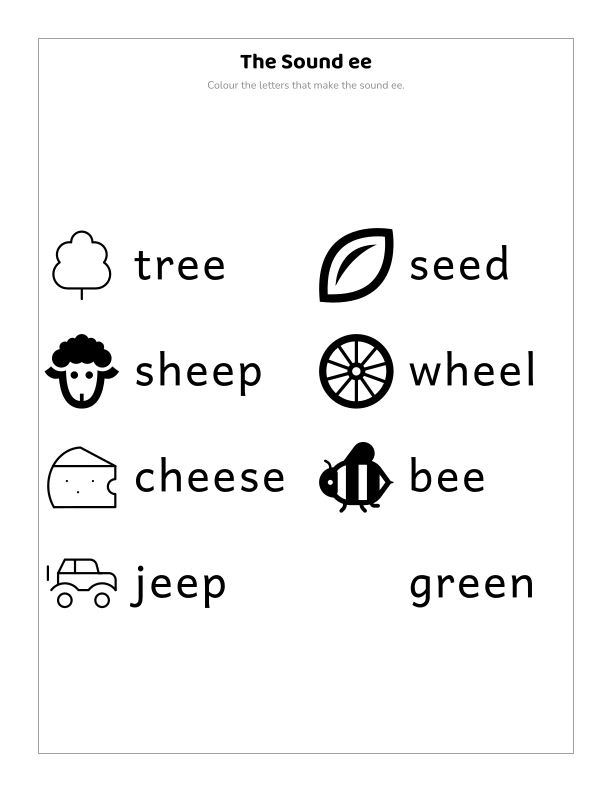
Colour the letters that make a sound, tick whether you hear it, and sort words by how it is spelt.
Letter and number tracing, handwriting lines, story prompts.
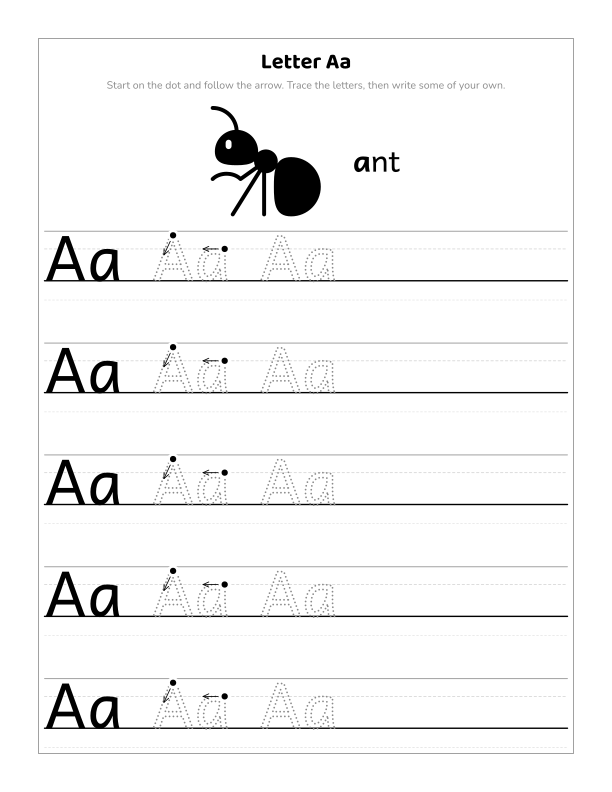
A letter to trace and then write alone, on primary handwriting rules.
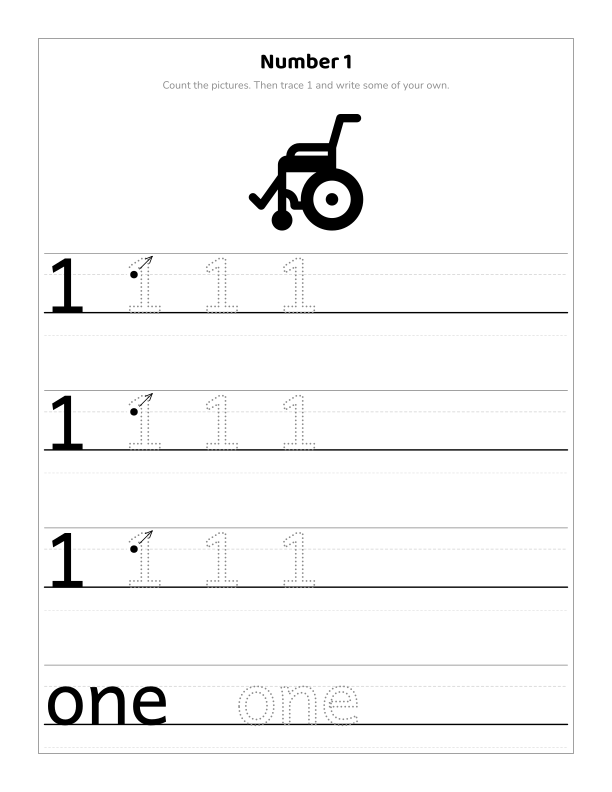
A digit to trace and write, with its word and that many things to count.
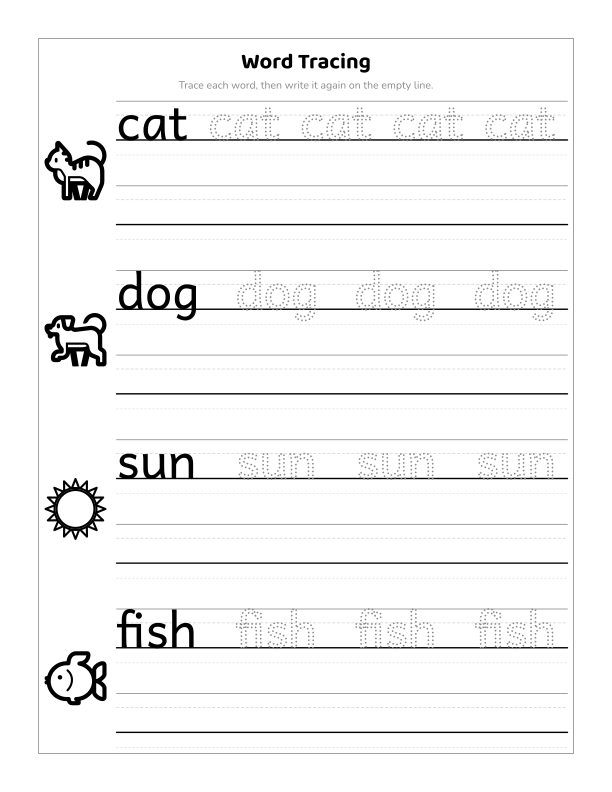
Whole words to trace and then copy: a name, a spelling list, the days of the week.
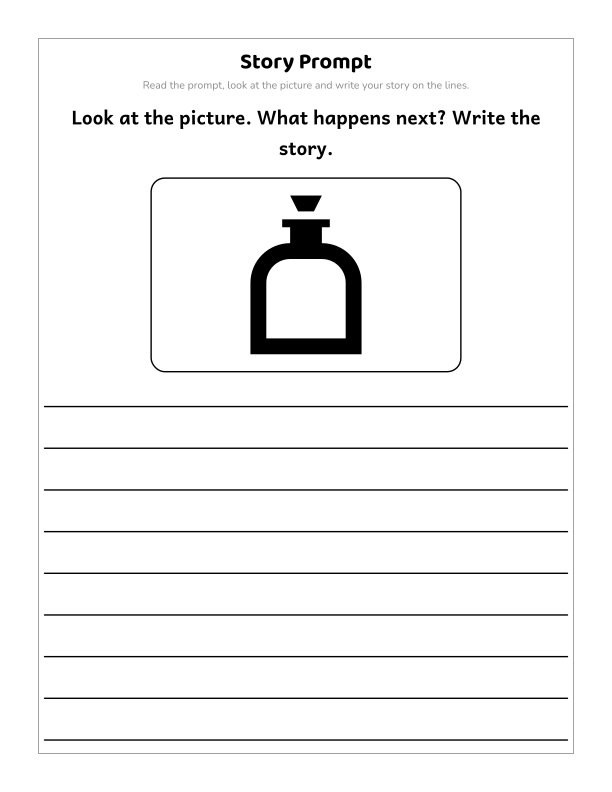
A writing prompt with a picture to start from and ruled lines to fill.
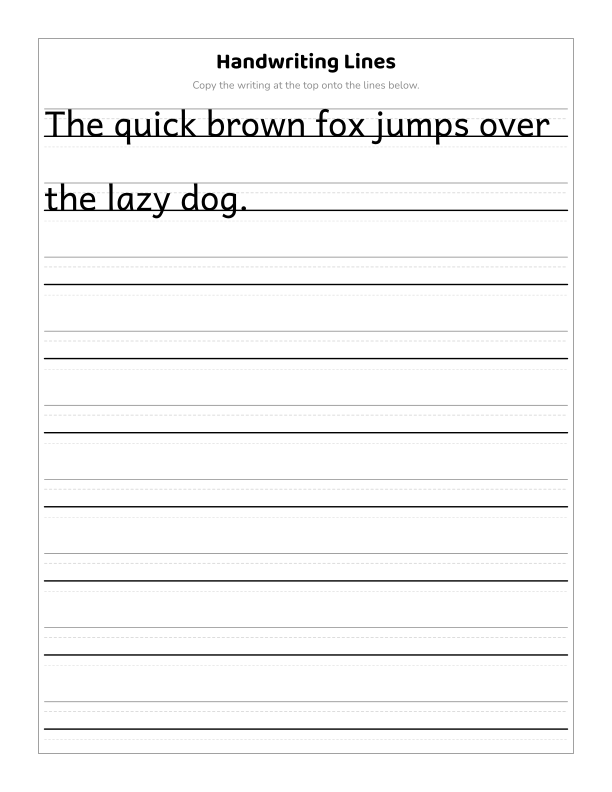
Your own words on handwriting rules: a model to copy, or faint text to trace.
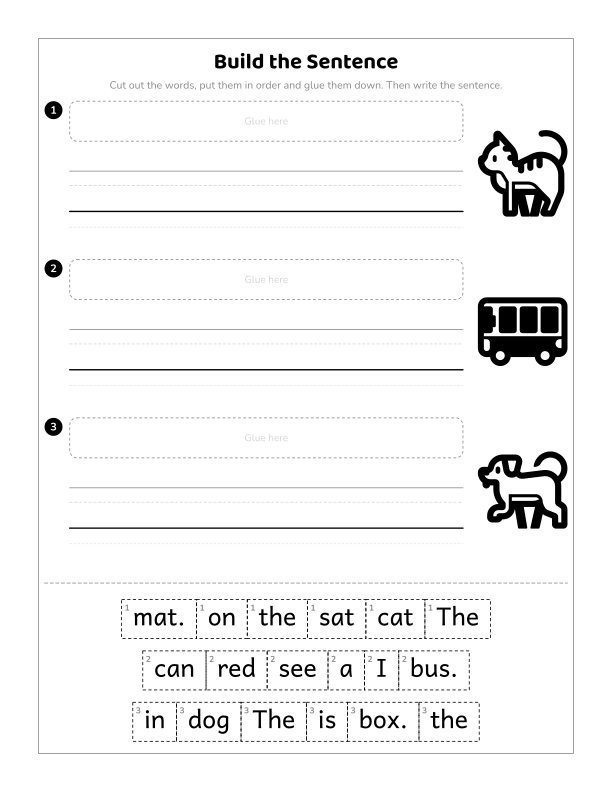
Short sentences to cut out and put in order, copy, draw or punctuate.
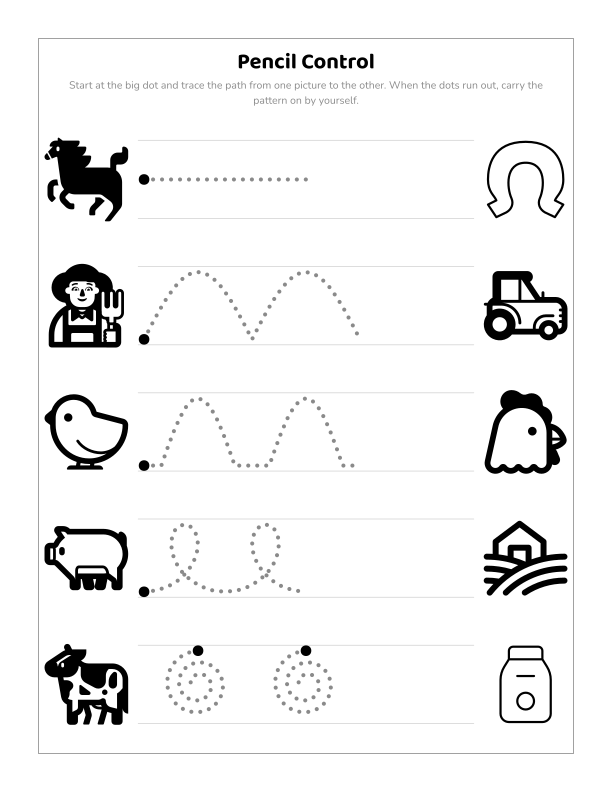
Rows of patterns and shapes to trace: lines, waves, humps, zigzags, loops, spirals, circles and squares.
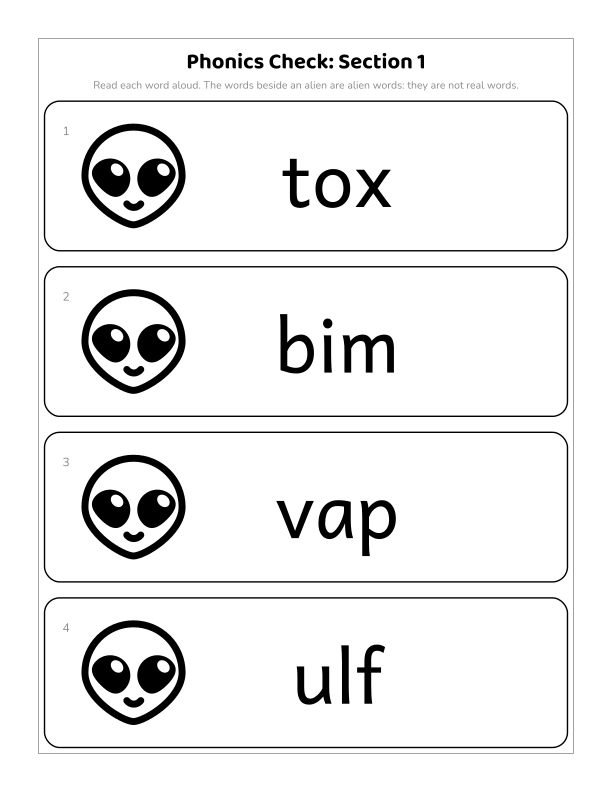
Real words and alien words to read, four to a page like the Year 1 Phonics Screening Check, and a score sheet.
Counting, sums, times tables, clocks, money, fractions, graphs.
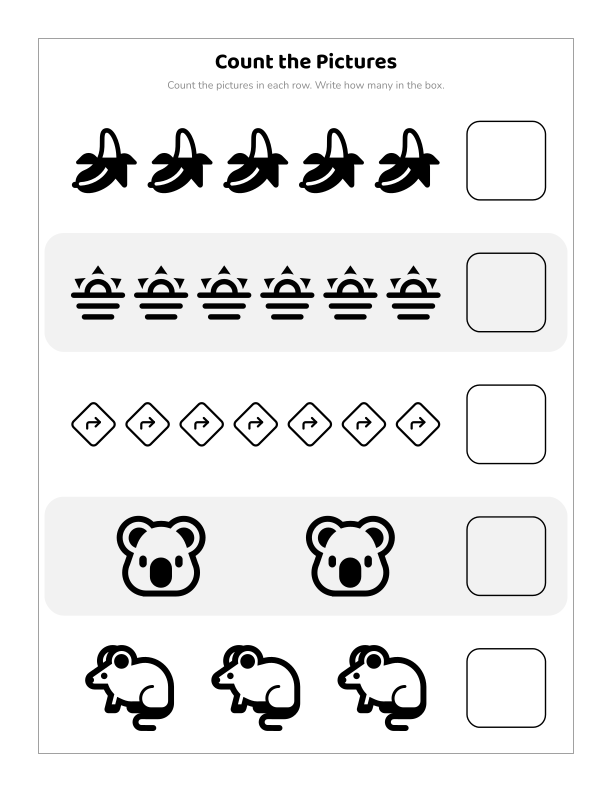
Rows or boxes of pictures to count, or a number to circle that many of.
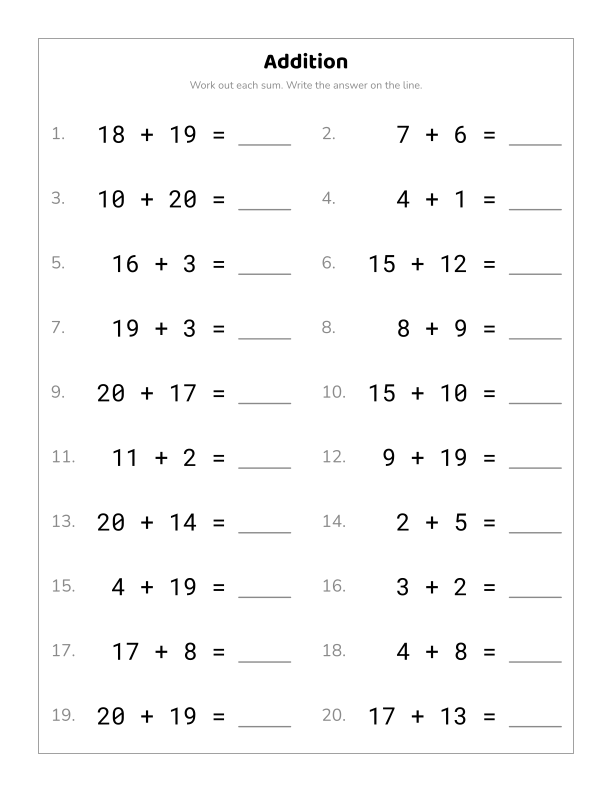
Rows of sums to work out: adding, taking away, times or sharing, laid out flat or in columns.
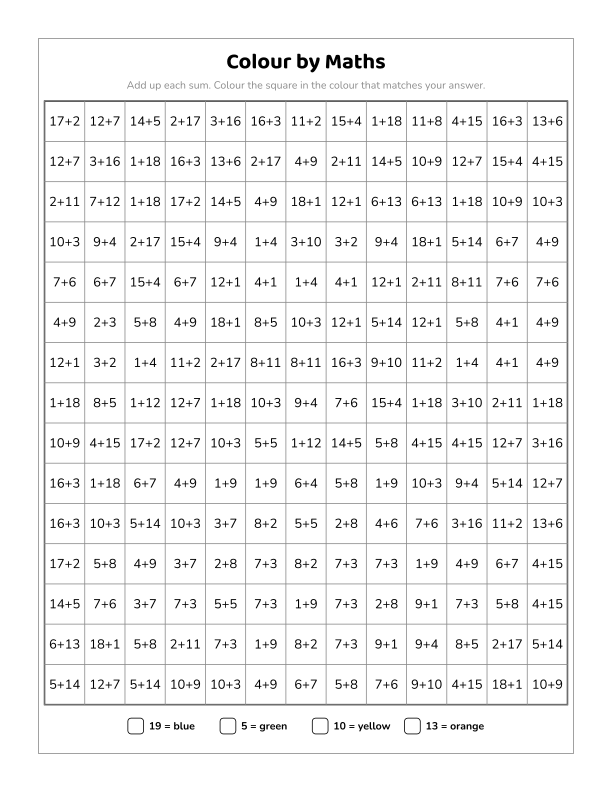
Work out each sum, look up the answer in the key, and a hidden picture appears.
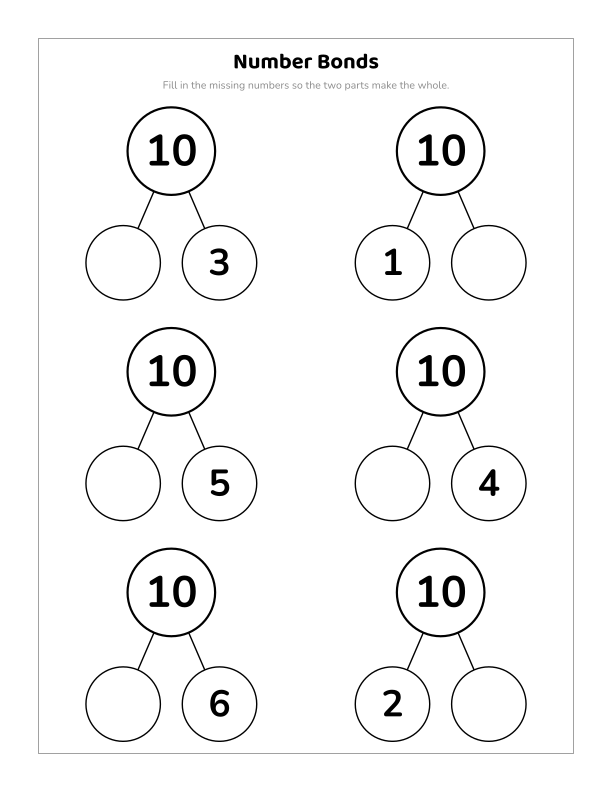
Part-part-whole: bond circles, ten-frames and bar models, with numbers left out.
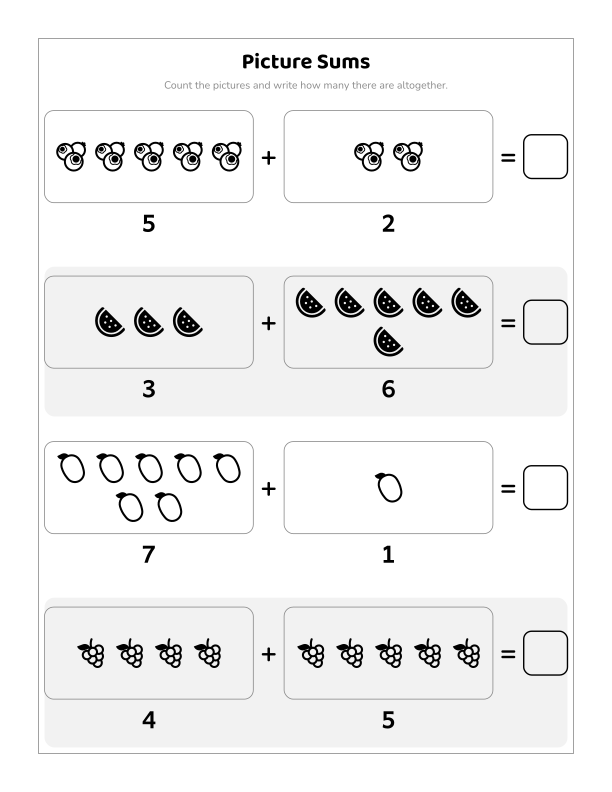
Adding and taking away with pictures: 3 apples + 2 apples, or 5 apples with 2 crossed out.
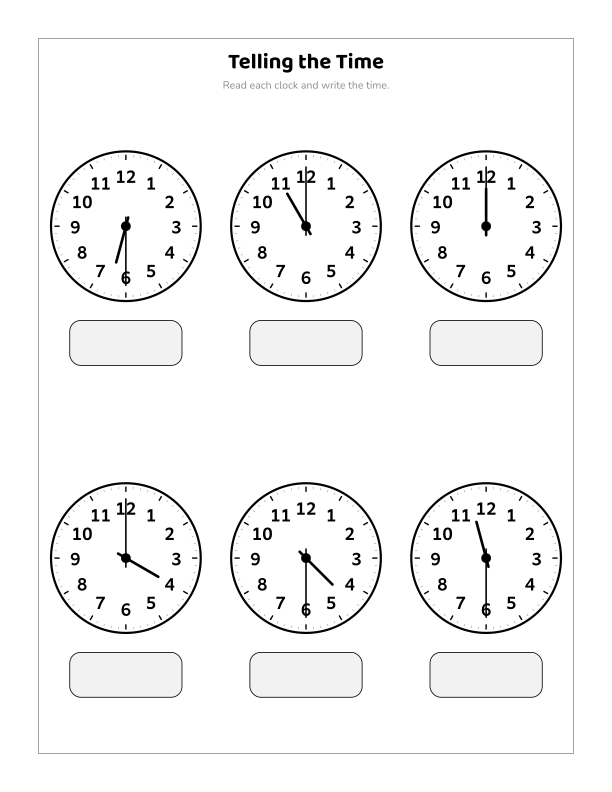
Proper clock faces to read, to draw the hands on, or to match up with digital times.
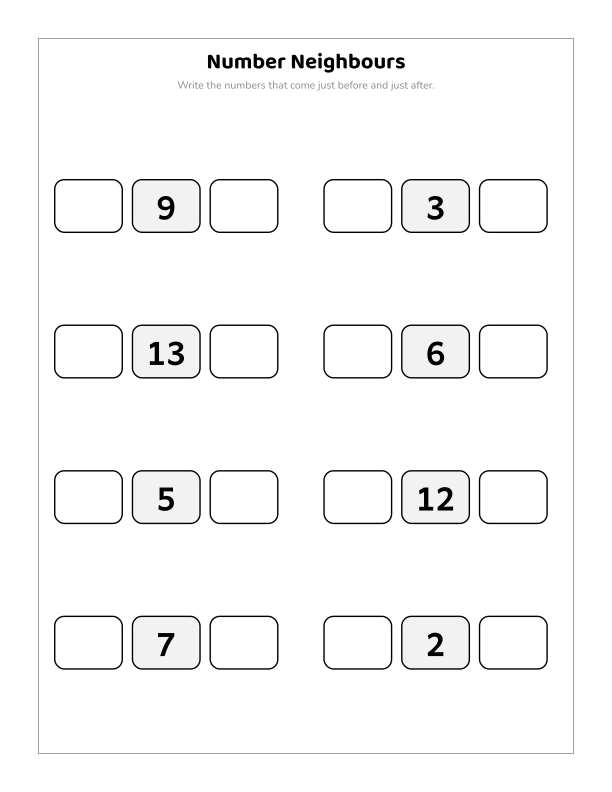
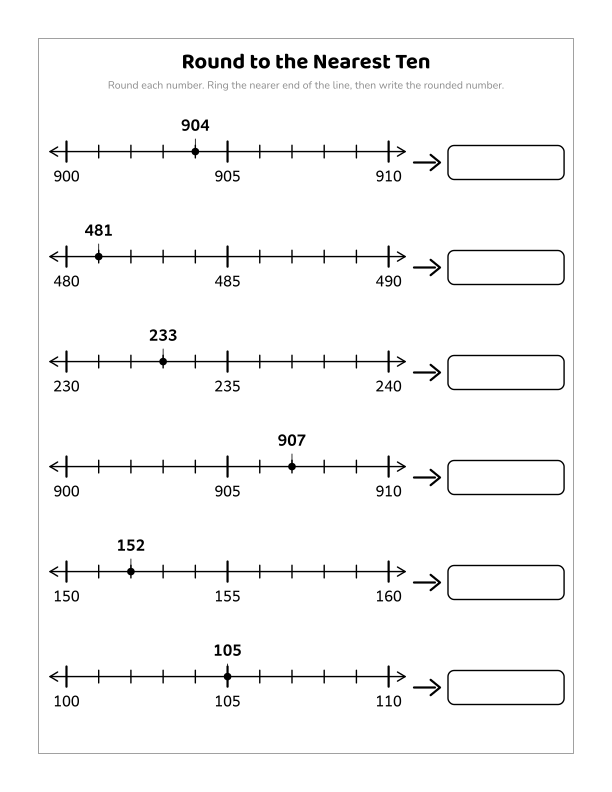
Before, after and in between; numbers in order; number lines, the hundred square, even and odd.
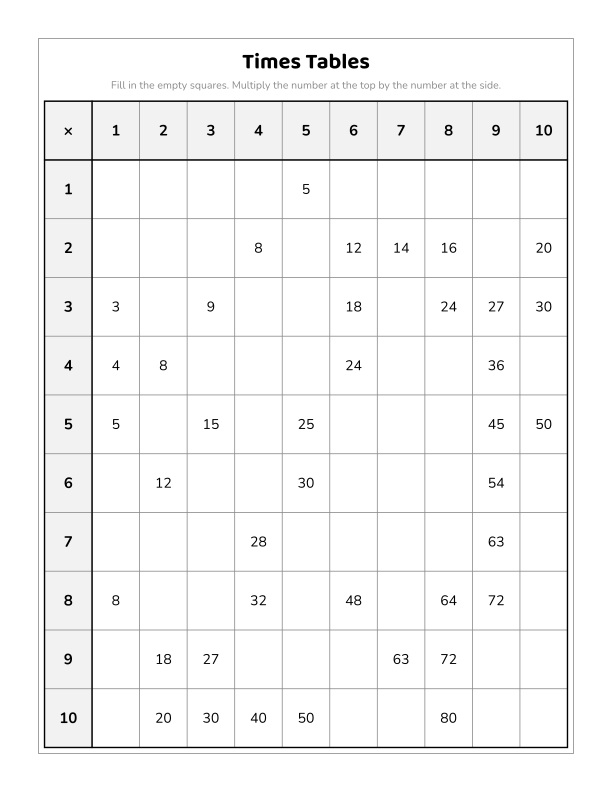
A multiplication square, a single table with gaps, or a times-table wheel.
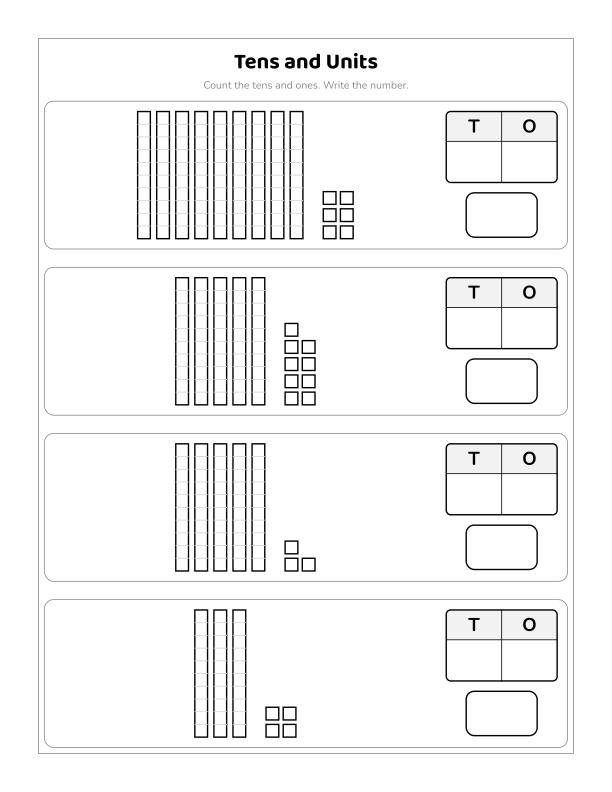
Place value with base-ten blocks, an abacus or bundles of sticks: read, draw, split and compare.
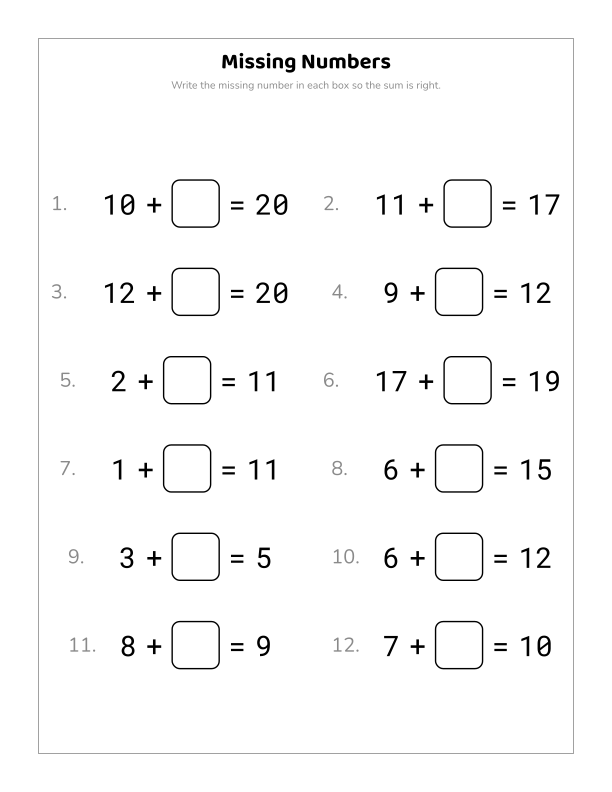
Sums with a box where a number should be: 7 + ☐ = 12, ☐ − 4 = 9, 3 × ☐ = 15.
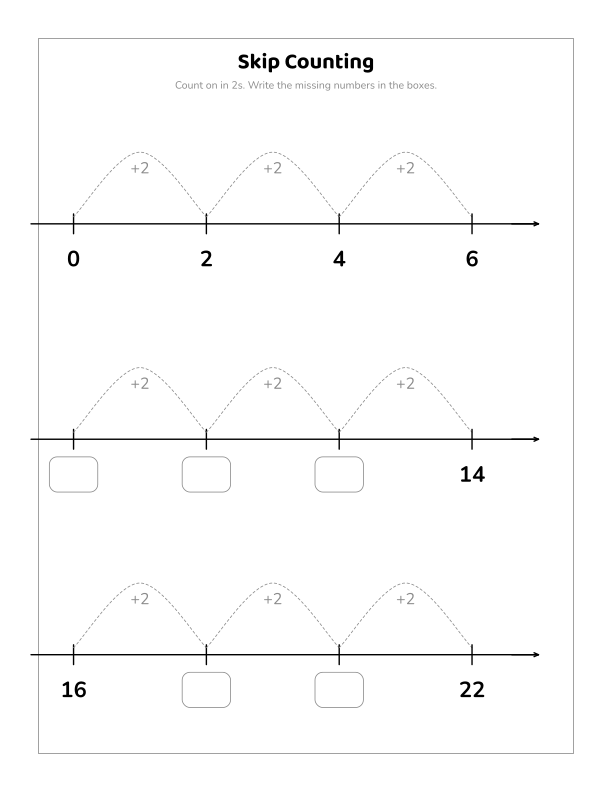
Count in twos, fives or tens along a number line, a trail of stones or a caterpillar.
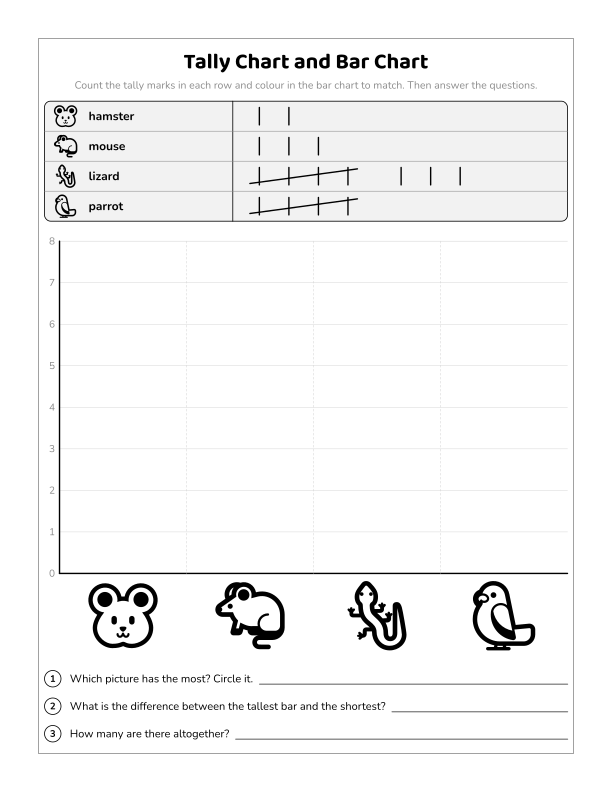
Count a tally chart or a pictogram, draw the bar chart, then answer questions about it.
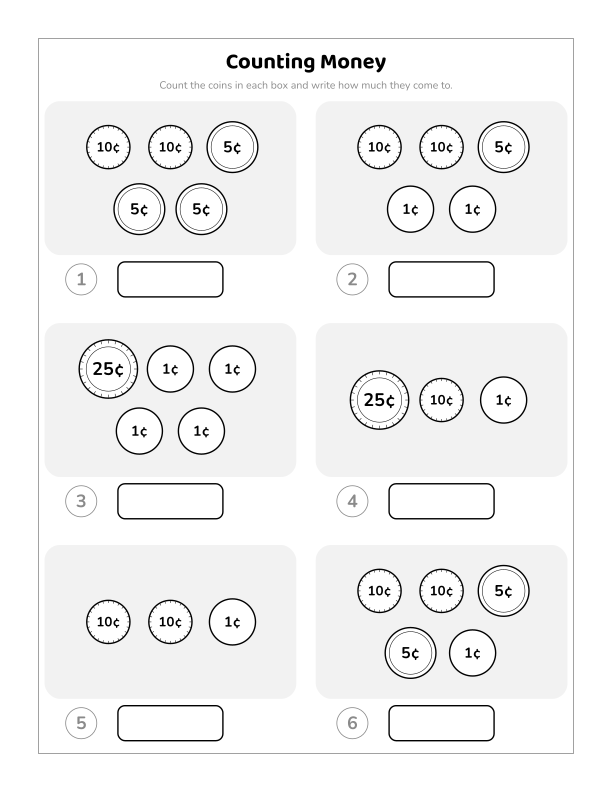
Coins and notes to count, amounts to make, prices to add up and change to work out.
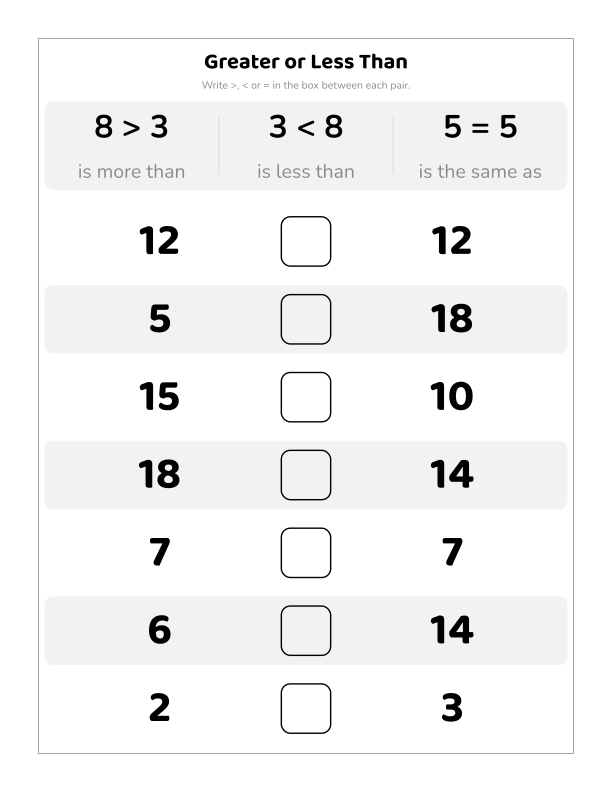
Pairs of numbers, pictures, sums or fractions with a box for >, < or =.
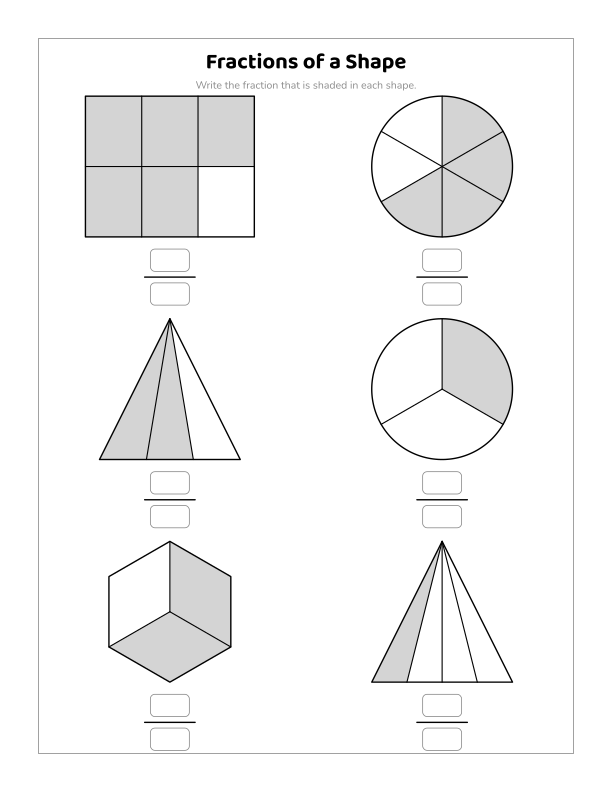
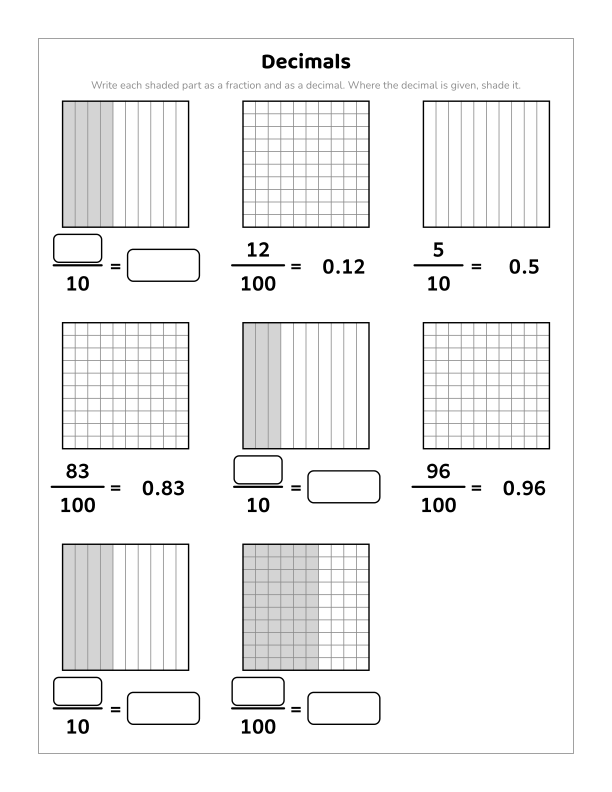
Circles, bars, triangles and hexagons cut into equal parts, to name or to shade.
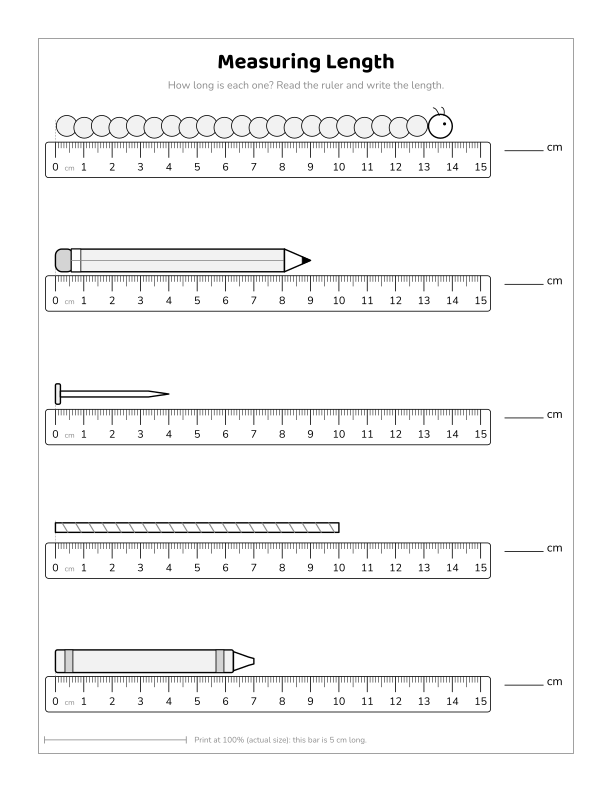
Measure pencils and lines on a ruler printed at true size, draw lines of a given length, or count cubes and paper clips.
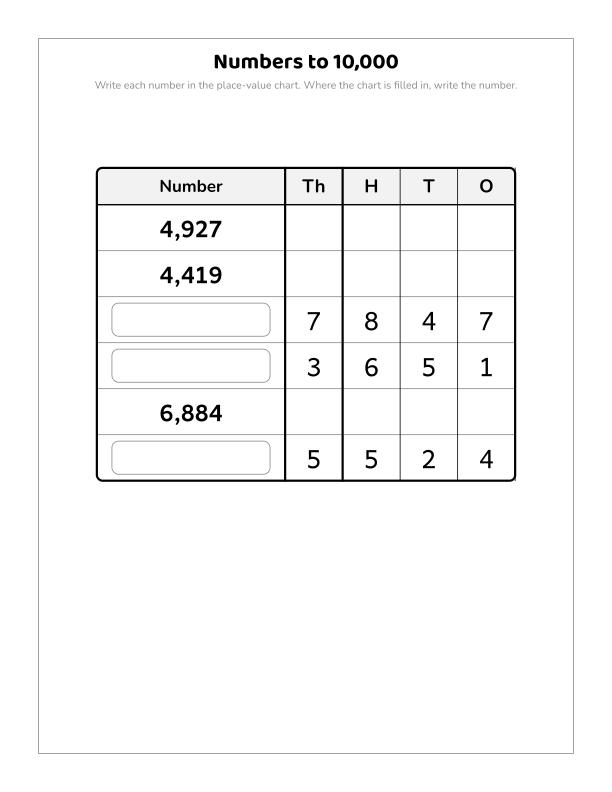
Numbers to 10 000, 100 000 or a million: the place-value chart, splitting, words, number lines, compare and order.
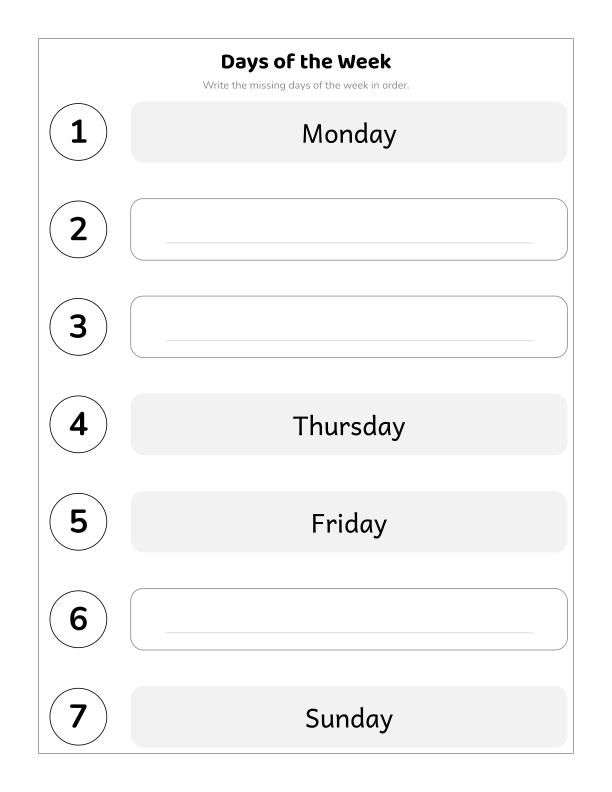
The days of the week, yesterday and tomorrow, a month to fill in, the months in order and the four seasons.
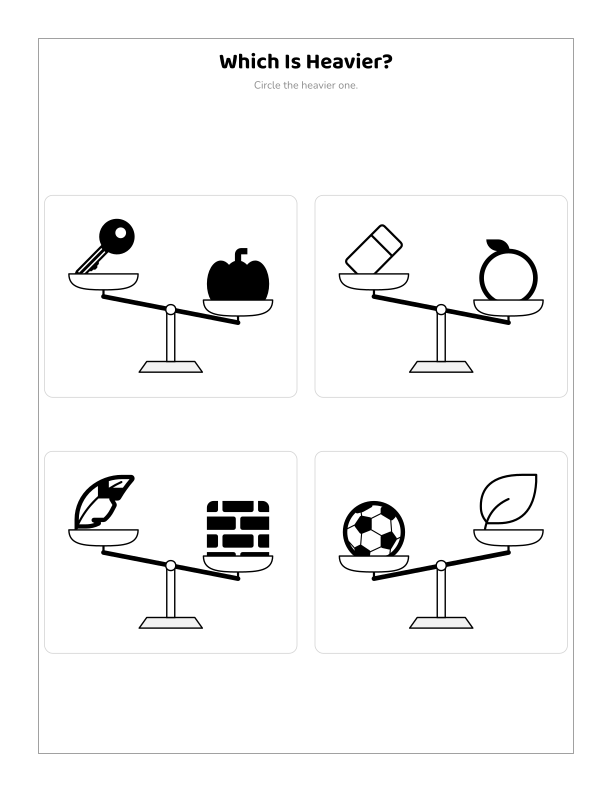
Balance scales, cubes and kitchen scales: which is heavier, how many cubes, and how many grams or kilograms.
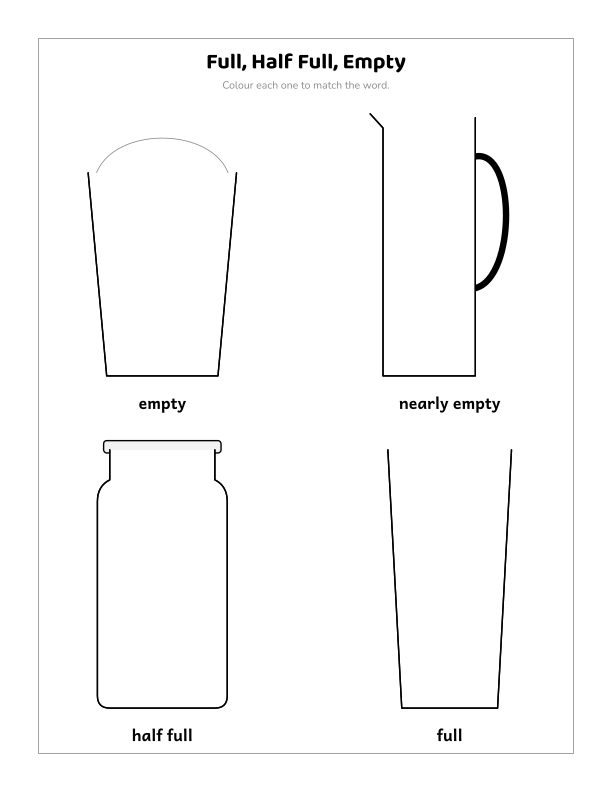
Full, half full and empty; more and less; how many cups; and measuring jugs read in l, ml or cl.
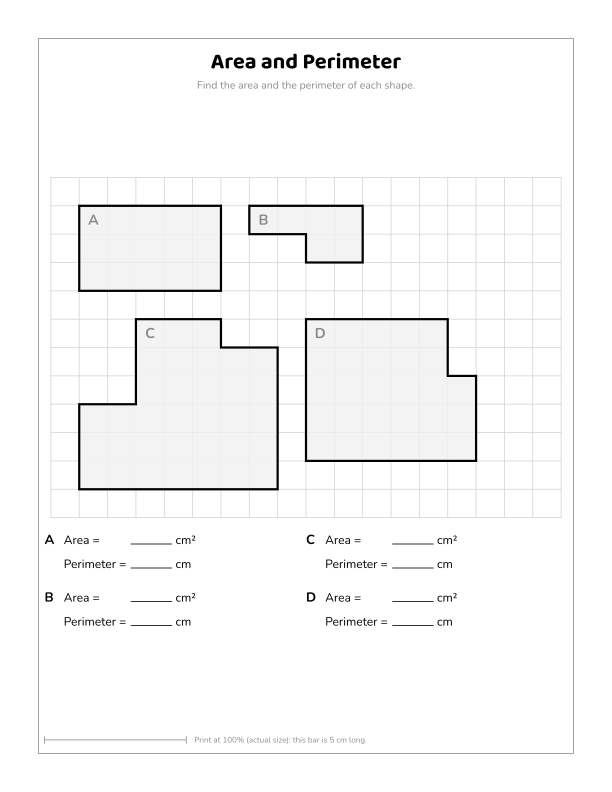
Count the squares, add up the sides, multiply length by width, find a missing side or draw a shape of a given area.
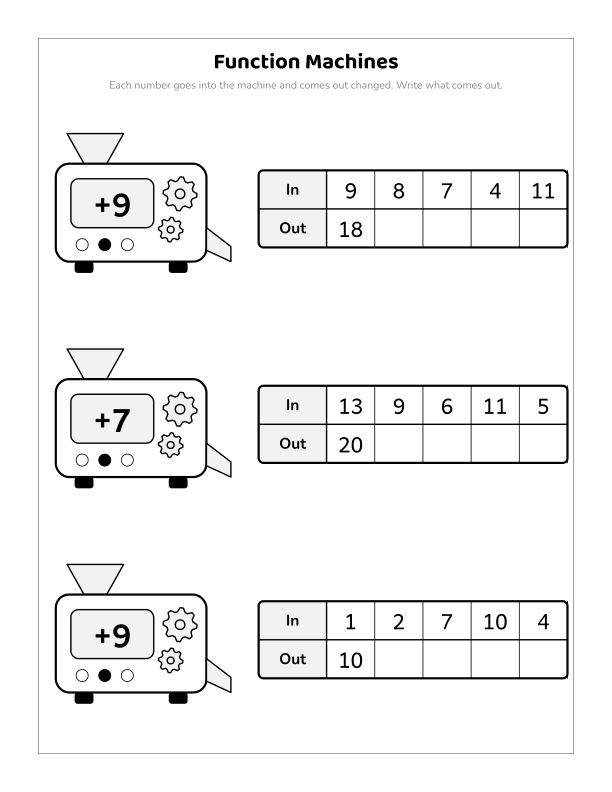
A machine that adds 3 or takes 2: complete its in/out table, find its rule, run it backwards, or fill a double-entry table.
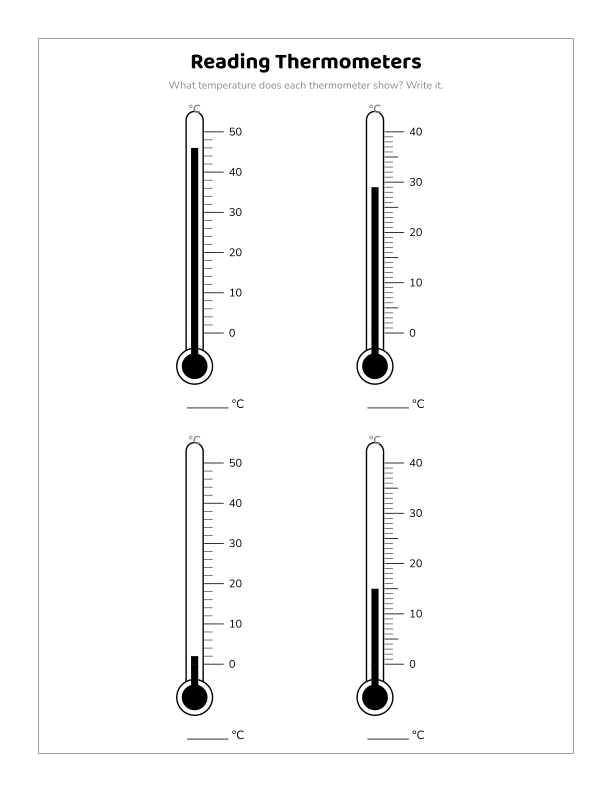
Read the temperature on each thermometer, or colour the column up to a temperature, in °C or °F.
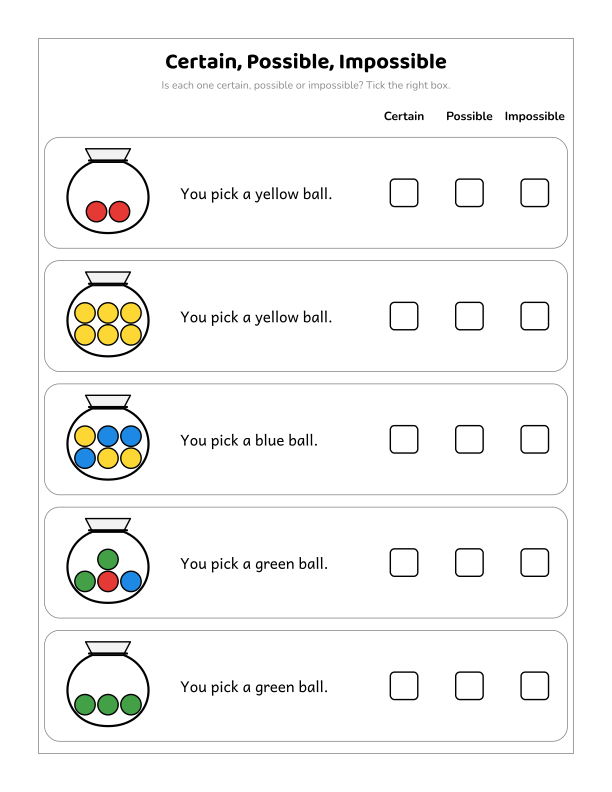
Bags of coloured balls, dice and everyday situations: is it certain, possible or impossible?
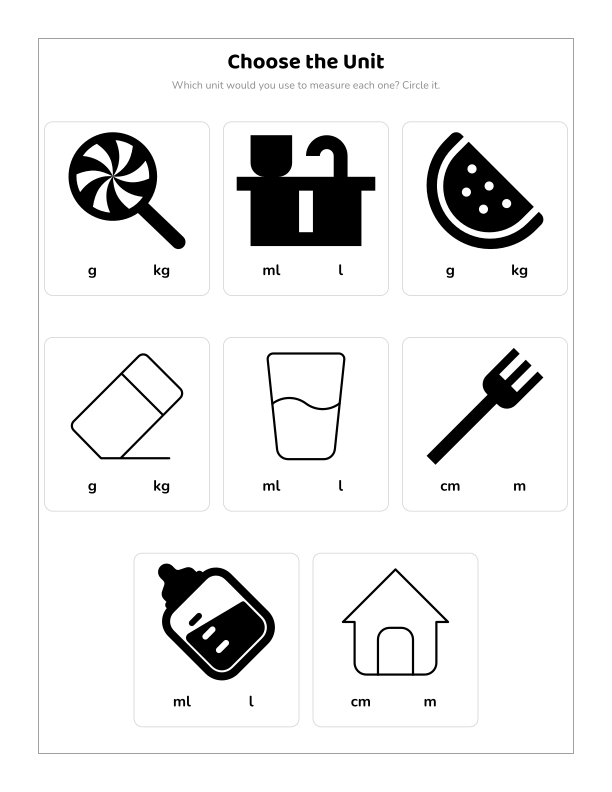
Which unit would you use, cm or m, g or kg, ml or l? And how many grams in 3 kg?
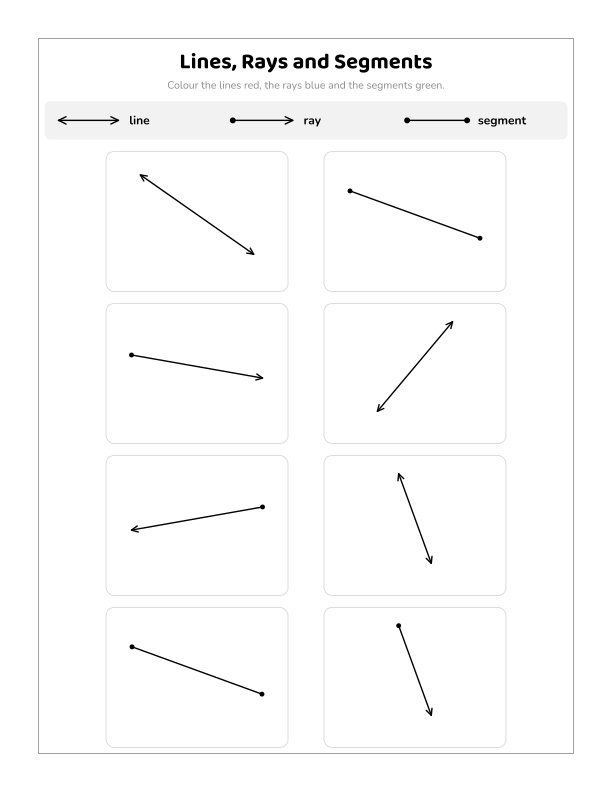
Lines, rays and segments; horizontal and vertical; parallel and perpendicular; right angles and turns.
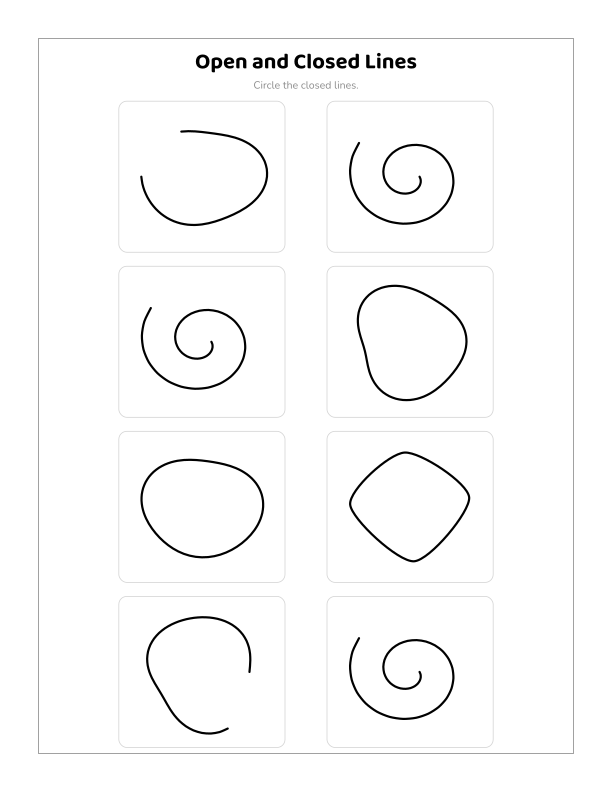
Open and closed lines, and what is inside, outside or on the boundary, as plain lines, fences or map borders.
Printable game boards, cards, paper craft and things to build.
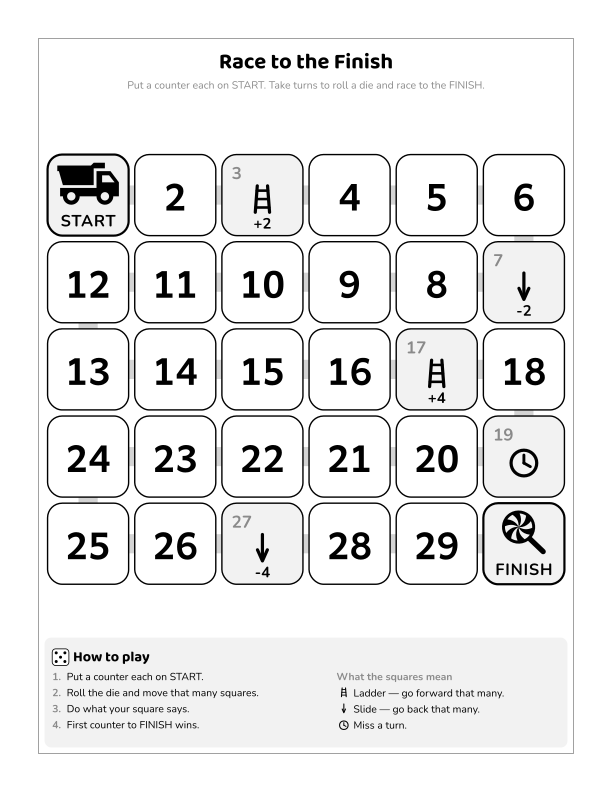
A numbered track from START to FINISH, with ladders, slides and miss-a-turn squares.
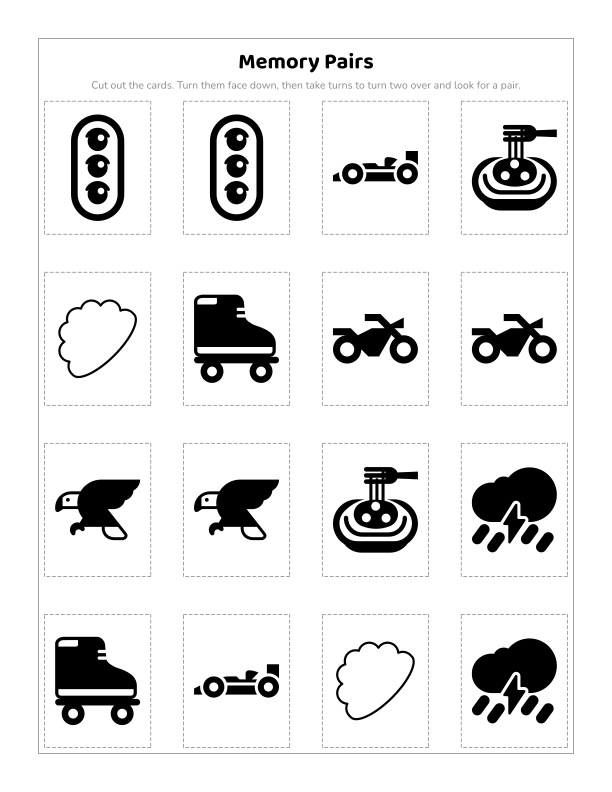
Cut-out cards in pairs: two pictures, picture and word, A and a, a number and its dots or word, or two rhyming pictures.
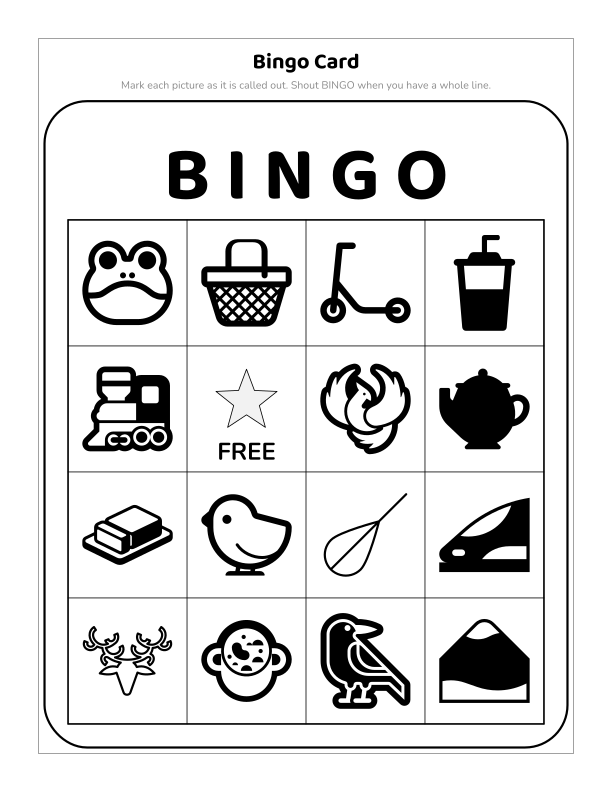
A bingo grid of pictures, numbers, letters or words — a different card every time.
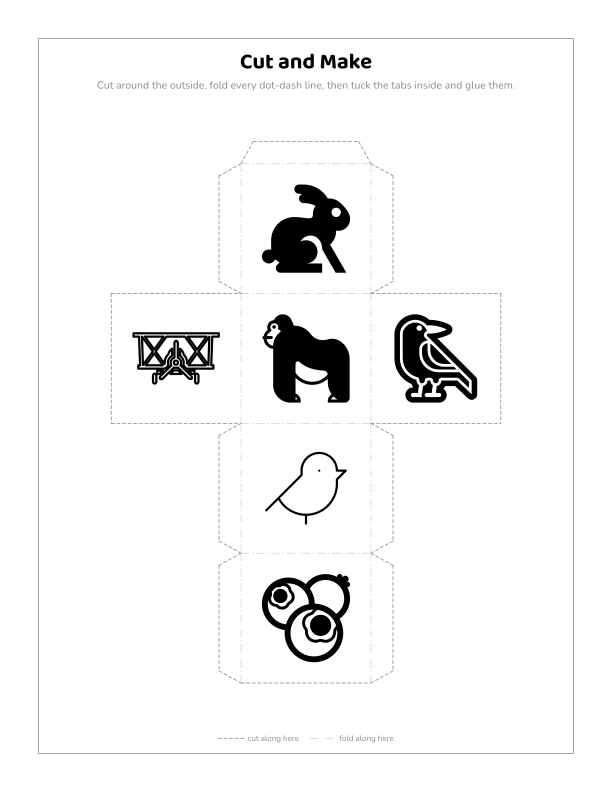
A cube, a bookmark, a mask, a fortune teller or finger puppets to cut out and build.
Covers, dividers, contents, certificates and notes pages.
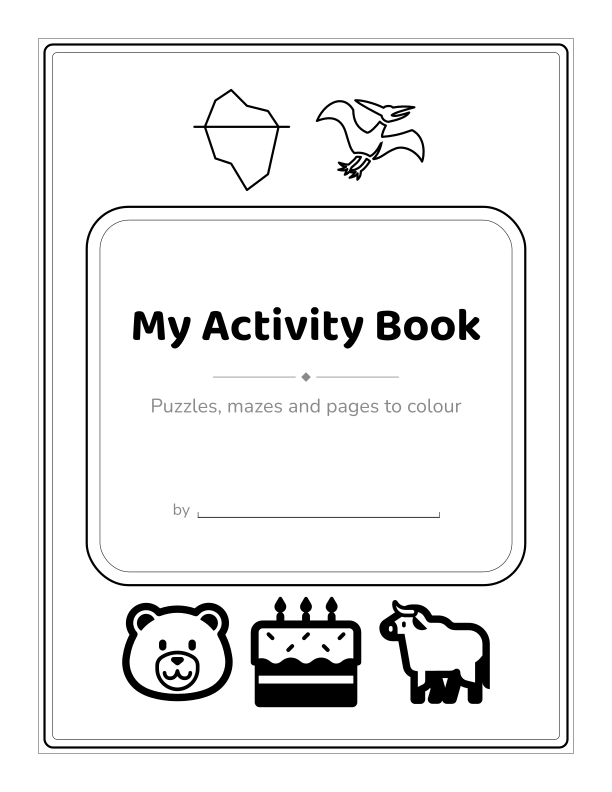
A front cover with a big title, pictures and a line for the child's name.
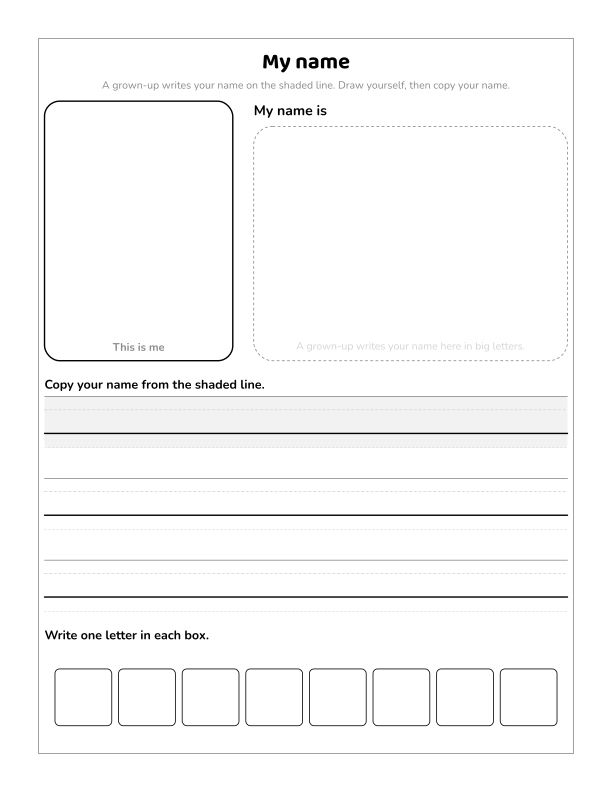
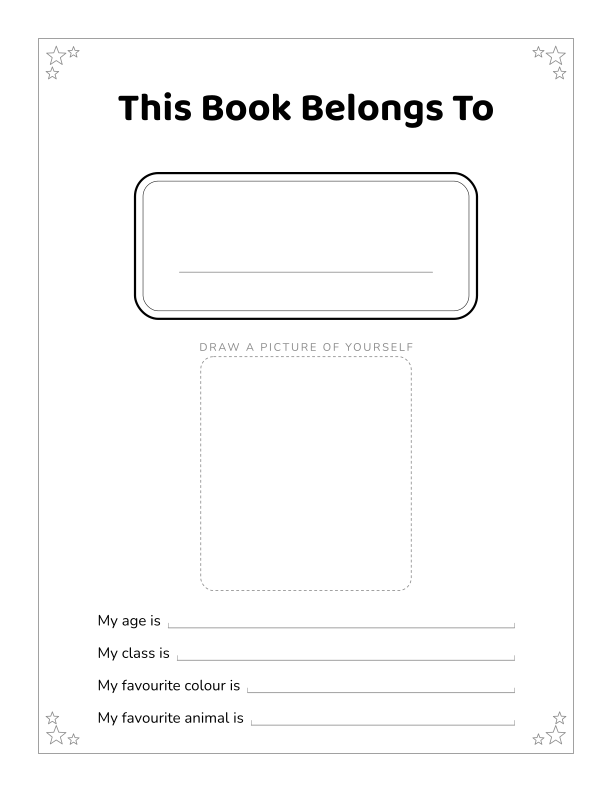
A name frame, a box to draw a self-portrait in, and lines to fill in.
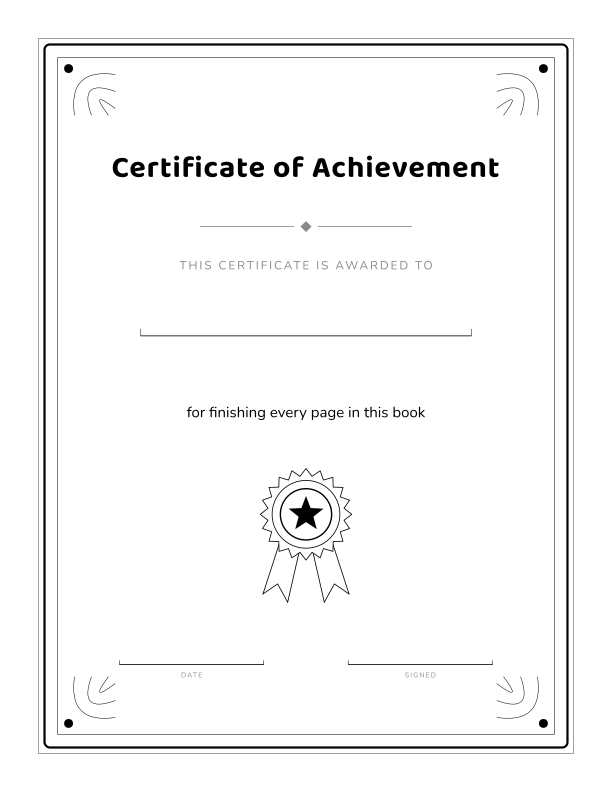
A certificate of achievement with an ornate border, a rosette and lines to fill in.
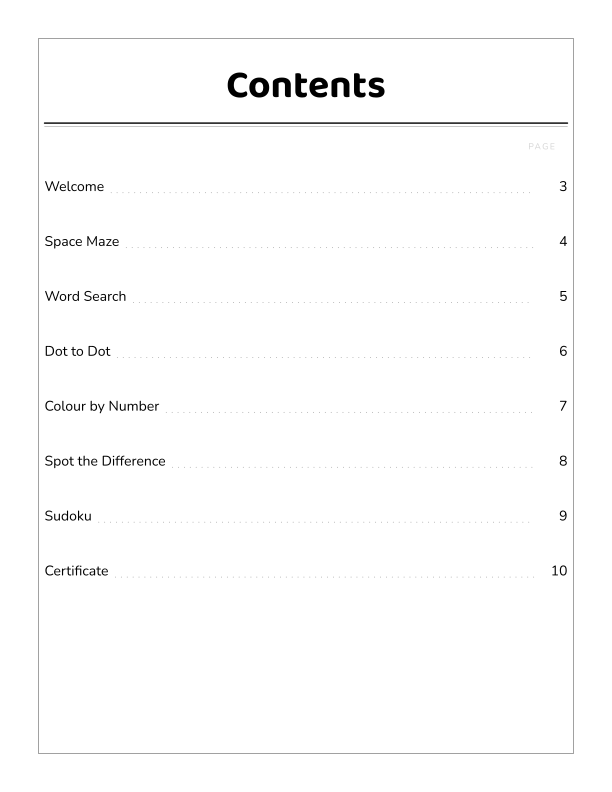
A typeset contents list with leader dots and page numbers down the right.
A back page that earns its place: ruled, squared, dotted, or a frame to draw in.