What Comes Next?
Repeating and growing patterns (AB, ABB, ABC) in shapes, colours, pictures, letters, numbers or syllables, to finish.
Repeating patterns, the first algebra a child ever meets. Each row runs its pattern through at least twice and then stops, and the child finishes it. The pattern shape is the difficulty: AB is a first pattern for a three-year-old, ABB and AAB need the child to hear the repeat rather than just alternate, and ABCD is a four-beat pattern that a five-year-old has to hold in their head. Rows can be drawn as shapes, as colours (the page's own, or real crayon colours for a red-blue garland), as pictures from a theme, which adds naming to the pattern work, or written as letters, numbers or syllables (pa pe pa pe) — your own, or chosen by the page. A growing pattern (A B, A B B, A B B B) asks for the next group rather than the next one.
- Age
- ages 3–7
- Answer key
- Included, free
- Skills
- pattern recognitionlogicvisual discriminationfine motor
What you can change
Pattern
Mixed, AB, AAB, ABB, ABC, ABCD…
Made of
Shapes, Colours, Pictures, Letters, Numbers, Syllables
How many rows
2–6 rows
Colours
The page's, Crayons
Blanks at the end of each row
1–2 cells
Around each cell
Nothing, Thin box, Shaded panel
- Every page also takes the book's language, page size, theme and pictures.
Ready-made worksheets with this page
Used in 33 worksheet sets for the school year, each in its country's language.
🔁 Patterns and order
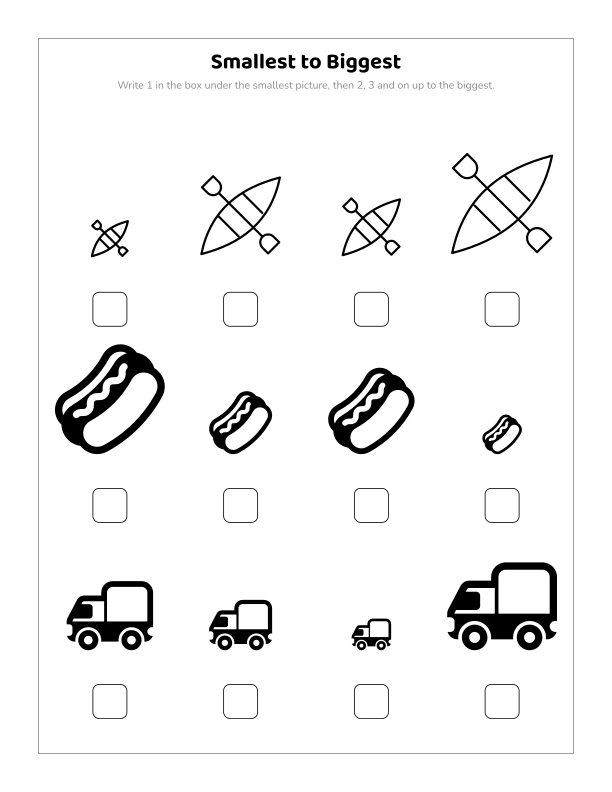
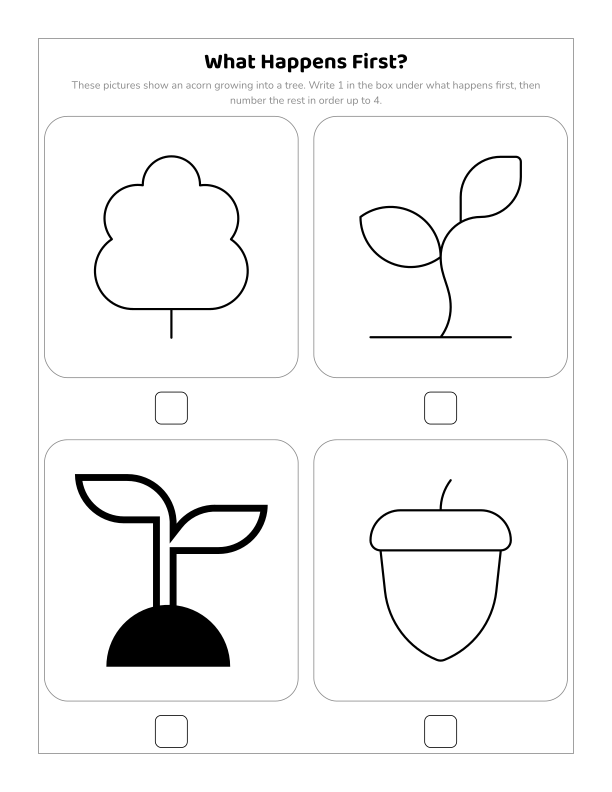
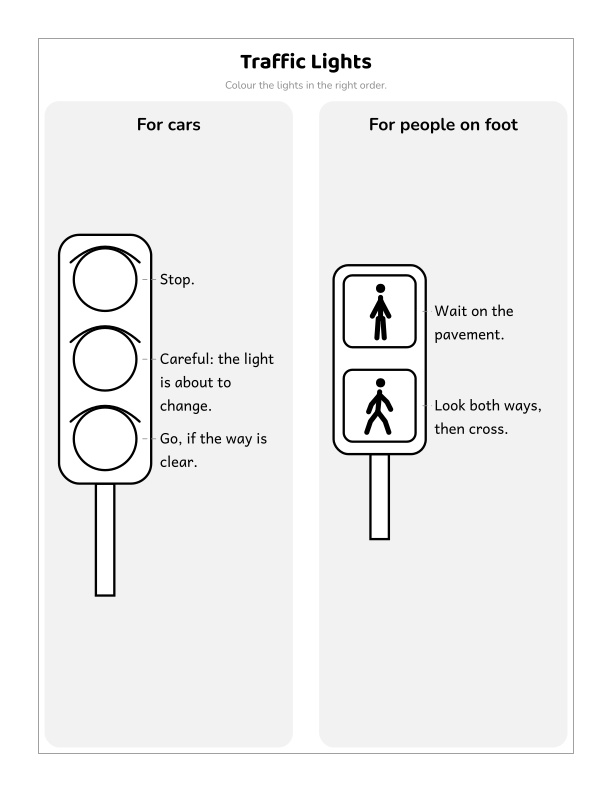
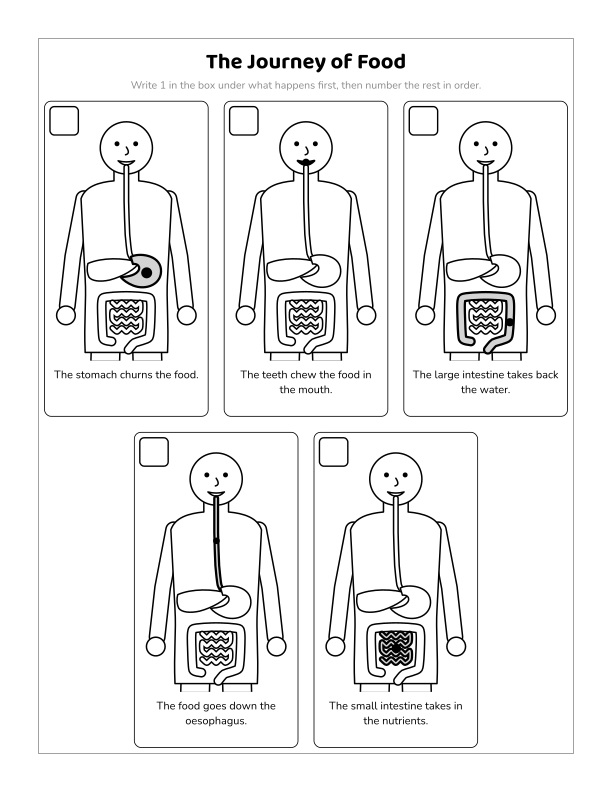
All activities →What comes next, smallest to biggest, what happens first.
Put it in a book with other pages: covers, answer keys and a certificate are free.
Start building