What Happens First?
Panels from a familiar story, shuffled, to be numbered back into order.
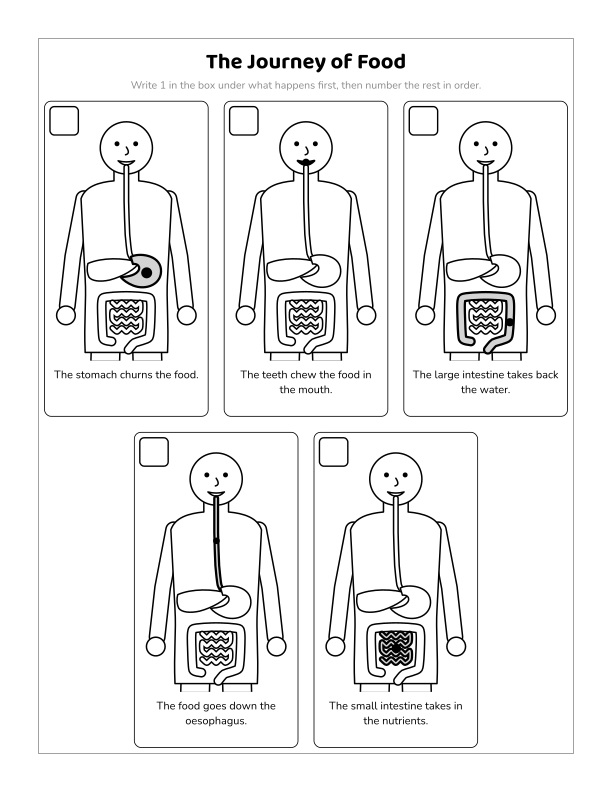
Sequencing: the child works out what happened first, next and last, and writes the numbers in the boxes. The stories are all ones a young child already knows from life or from the science corner rather than from a book — an acorn growing into a tree, an egg hatching, getting dressed, making a sandwich, a day from waking up to bedtime, a school day, and the life cycles of a butterfly, a frog and a plant — so the ordering is done from experience and not from having read the right story. Ask for fewer panels and the story is sampled down rather than cut short: the beginning and the end are always there. Captions under the pictures are printed in the book's language.
- Age
- ages 3–9
- Answer key
- Included, free
- Skills
- sequencinglogicvocabularyvisual discrimination
What you can change
Story
An acorn grows into a tree, An egg hatches, Getting dressed, Making a sandwich, Morning to bedtime, Life cycle of a butterfly…
How many panels
3–6 panels
Around each panel
Thin box, Shaded panel, Nothing
Words under the pictures
- Every page also takes the book's language, page size, theme and pictures.
Ready-made worksheets with this page
Used in 87 worksheet sets for the school year, each in its country's language.
- Nursery (ages 3-4)Growing beans
- Reception (ages 4-5)All about me
- Pre-KWinter and Snow
- Pre-KButterfly Life Cycle
- Pré-escolar · 4 anosDa semente à planta
- Pré-escolar · 5 anosOs dias da semana
- Educação Infantil · Maternal III (3 anos)Meu corpo e a higiene
- Educação Infantil · Maternal III (3 anos)Sequência da história
🔁 Patterns and order
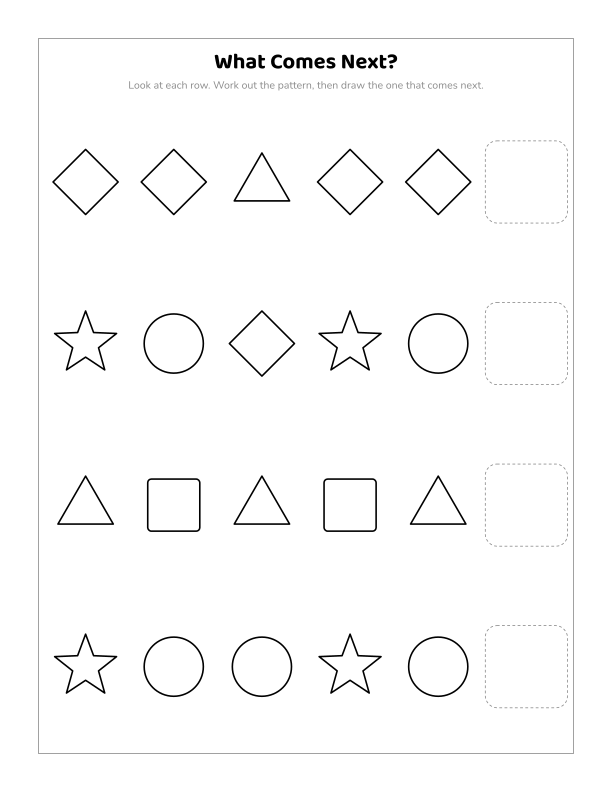
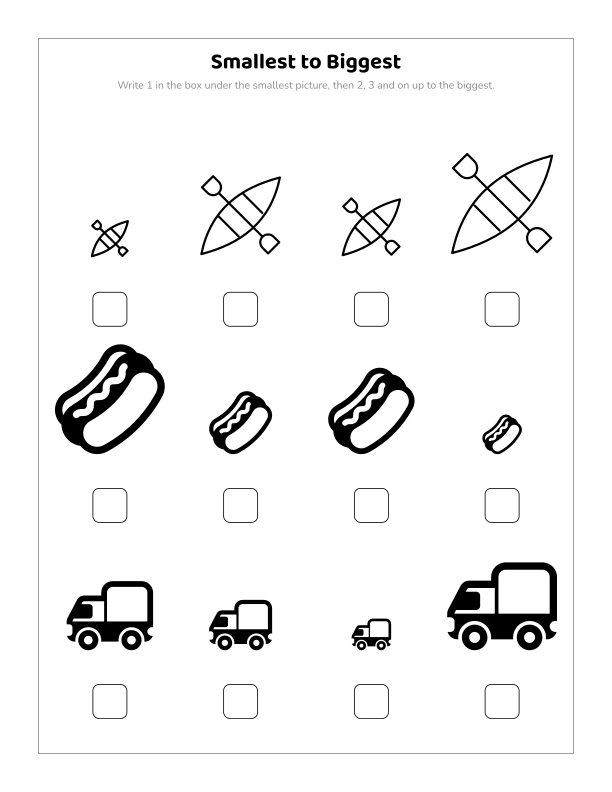
All activities →What comes next, smallest to biggest, what happens first.
Put it in a book with other pages: covers, answer keys and a certificate are free.
Start building