Tens and Units
Place value with base-ten blocks, an abacus or bundles of sticks: read, draw, split and compare.
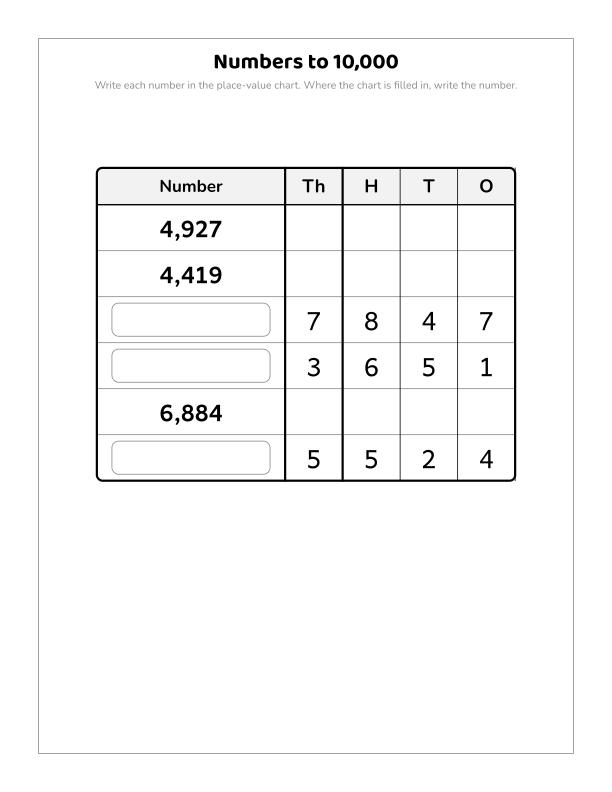
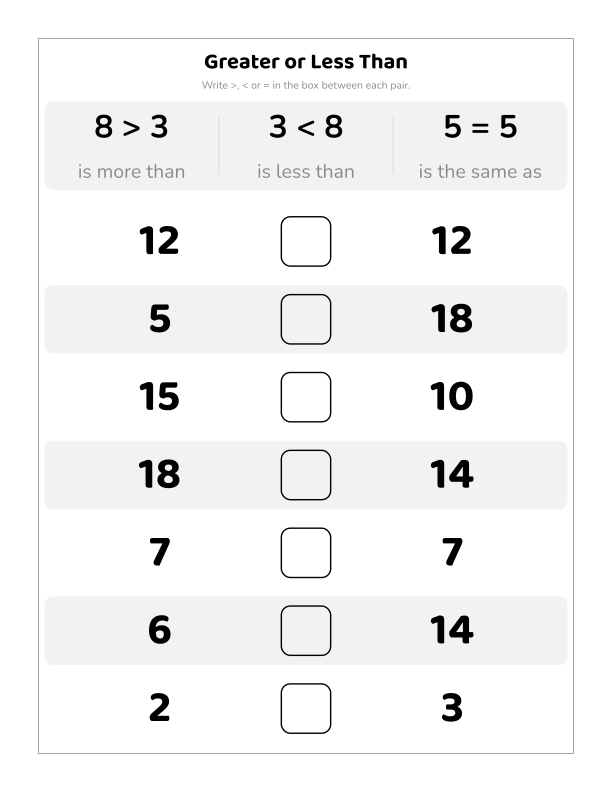
The page that teaches what the 3 in 34 means. Numbers are drawn as base-ten blocks (rods of ten and single cubes, with flats for hundreds), as beads on an abacus, or as bundles of ten sticks and loose ones. The child counts them and writes the number in a tens-and-units table, draws a given number on an empty abacus or mat, splits a number into tens and units (34 = 3 tens + 4 units = 30 + 4), or compares two numbers with <, > or =. Go up to 20 for the teen numbers, up to 100 for tens and units, or up to 1000 for hundreds, tens and units. The column headings are written the way schools in the book's language write them.
- Age
- ages 5–9
- Answer key
- Included, free
- Skills
- countingarithmetic
What you can change
Task
Read and write, Draw the number, Split the number, Compare
Drawn as
Blocks, Abacus, Sticks
Numbers up to
20–10000
How many numbers
2–8
Column headings
Letters, Words
In English, the units are
Ones (T O), Units (T U)
Show the blocks
- Every page also takes the book's language, page size, theme and pictures.
Ready-made worksheets with this page
Used in 39 worksheet sets for the school year, each in its country's language.
💯 Place value and big numbers
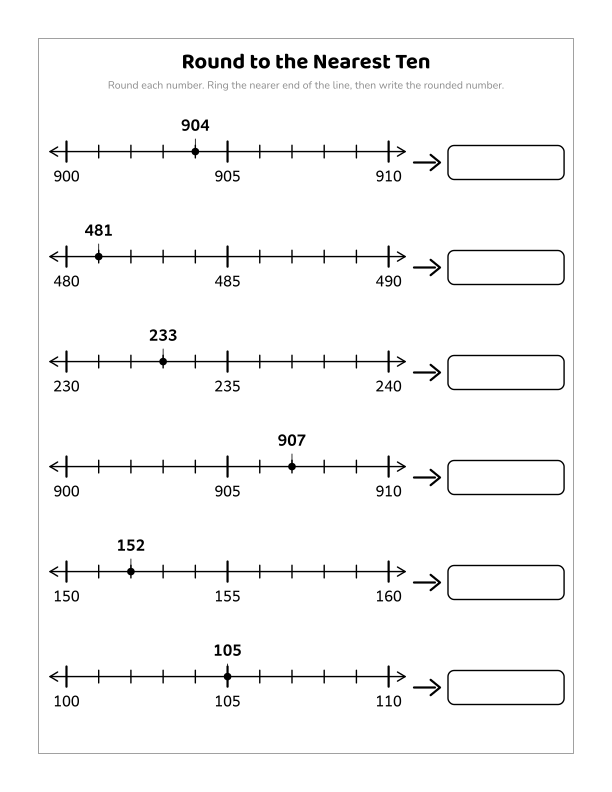
All activities →Tens and units, numbers to a million, rounding.
Put it in a book with other pages: covers, answer keys and a certificate are free.
Start building